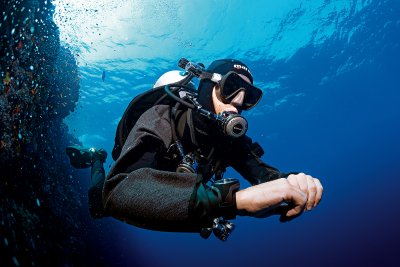
Entdecke Wolf Island
Die Wolfsinsel in den ecuadorianischen Galapagosinseln ist für die meisten Scuba Diver ein erstrebenswertes Ziel. Dieser winzige (1,5 km²) Fleck vulkanischen Gesteins, der 350 km von San Cristobal entfernt liegt, bietet einige der besten Tauchplätze der Welt.
Der Tourismus auf der Insel ist verboten, so dass die einzigen Besucher Tauchsafaris sind. Die einzige nahe gelegene Nachbarinsel ist Darwin Island, so dass nur wenig Verkehr, der nichts mit dem Tauchen zu tun hat, in diese Richtung fließt. Das Tauchen auf Wolf Island kann kompliziert sein - heftige Strömungen, starke Brandung und unruhige Oberflächen schaffen Bedingungen, die nur für erfahrene Taucher geeignet sind.
Die Höhepunkte des Tauchens auf Wolf Island sind zahlreich, aber das ikonischste Bild ist sicherlich die "Wand" aus Hammerhaien, die sich im Sonnenlicht abzeichnet und sich sanft in die Strömung wölbt.
Die besten Monate zum Tauchen in Wolf Island
Wolf Island Dive ist das ganze Jahr über möglich. Von Januar bis Juni ist die warme und feuchte Jahreszeit. In dieser Zeit gibt es etwas mehr Niederschlag und der Ozean ist wärmer (25°C) und ruhiger. Dies ist die beste Jahreszeit, um Mantas und größere Schwärme von Hammerhaien zu sehen - obwohl diese das ganze Jahr über zu sehen sind.
Von Juni bis Dezember bringt der Humboldtstrom kühles, nährstoffreiches Wasser aus dem Norden. Das vermehrte Plankton im Wasser lockt die saisonalen Besucher an - Walhaie. Diese riesigen Fische sind in dieser Jahreszeit regelmäßig zu sehen.
Top Wolf Island Dive Sites
1. El Derrumbe
This site is renowned for its diverse marine life including schooling hammerheads, manta rays, turtles, and Galapagos sharks. Occasional sightings of whale sharks and massive fish schools add to the spectacle. It is considered an advanced scuba diving site, featuring gentle slopes starting at 10 meters. The aquatic environment is part of a protected marine park, offering a unique underwater experience.
2. Shark Bay
True to its name, Shark Bay is dominated by a variety of sharks, including large schools of hammerheads at around 25 meters, as well as Galapagos and silky sharks. Sea lions are a common sight here. This advanced scuba diving site is known for its vibrant shark population and dynamic underwater environment, ideal for seasoned divers.
3. The Caves
Featuring stunning caves, caverns, and swim-throughs created by erosion, The Caves offer an exciting exploration for scuba divers. Once out of the caves, divers can enjoy a gentle drift while observing the breathtaking topography and abundant aquatic life. This site is suitable for advanced divers due to its complex underwater structures.
4. Fondeadero
Fondeadero is a popular night dive location, protected from strong currents, making it suitable for both beginner and advanced scuba divers. The site offers a magical experience with bioluminescence and sightings of deep-sea creatures and fur seals hunting by night. This dive site provides a unique opportunity to explore the underwater world after dark.
5. North Islet
Also known as La Banana due to its curved shape, North Islet features a wall dotted with caverns, tunnels, and captivating topography. The moderate to strong currents make it ideal for advanced scuba divers. Divers can expect to encounter hammerheads, turtles, and manta rays, adding to the excitement of exploring this dynamic site.