Continenti
Explore this destination and discover its diving opportunities.
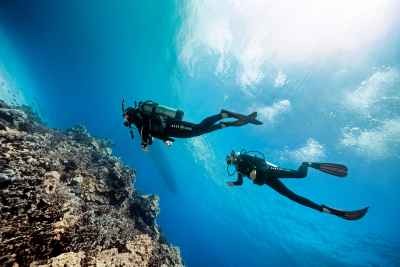
This advanced dive site descends from 7 meters/23 feet to almost 50 meters/164 feet, featuring sea fans, soft corals, a large cave, and an overhang. Divers can encounter frogfish, moray eels, Spanish dancers, and pelagic animals such as sharks and bumphead parrotfish. Scuba diving is recommended.
Accessible only by boat and best for experienced divers due to strong currents and required negative entry. The submerged island stretches from 10 meters/33 feet to 40 meters/131 feet, with corals, reef fish, sea snakes, and large turtles. Pelagics like eagle rays and whale sharks may appear. Scuba diving only.
Ideal for beginners and reachable from the shore, this site offers sandy areas and coral collections, home to macro life like peacock mantis shrimp and nudibranchs. Frogfish, crocodile fish, turtles, and puffer fish are common. Suitable for scuba and night diving.
A gently sloping reef with intriguing coral formations, suitable for open water divers, with the main attraction at 15 meters/49 feet. Turtles, peacock mantis shrimp, and cuttlefish are prevalent, making it great for photography. Features a narrow swim-through for skilled divers. Scuba diving only.
As a protected area, this sanctuary offers easy dives with a rich array of marine life, including clownfish, groupers, and various coral species. It's suitable for both scuba diving and freediving, providing excellent opportunities for beginners and photographers.
Le immersioni a Siquijor sono possibili tutto l'anno, ma le condizioni migliori si hanno durante la stagione secca, tra dicembre e aprile. Le Filippine sono caratterizzate da piogge tutto l'anno, anche se a Siquijor ne piove meno rispetto ad altre isole. Le piogge sono consistenti tra giugno e novembre e il mare può essere talvolta agitato. Poiché tutti i siti di immersione sono vicini alle isole, questo non influisce sulle immersioni ma può rendere un po' difficoltose le traversate in traghetto. La temperatura dell'acqua è costante, tra i 26 e i 30°C tutto l'anno.
Durante la stagione secca, i prezzi dei resort possono essere un po' più alti perché è il periodo di maggiore affluenza. I giorni festivi come il Capodanno e il Capodanno cinese sono ancora più affollati, quindi tieni conto di queste date al momento della prenotazione.