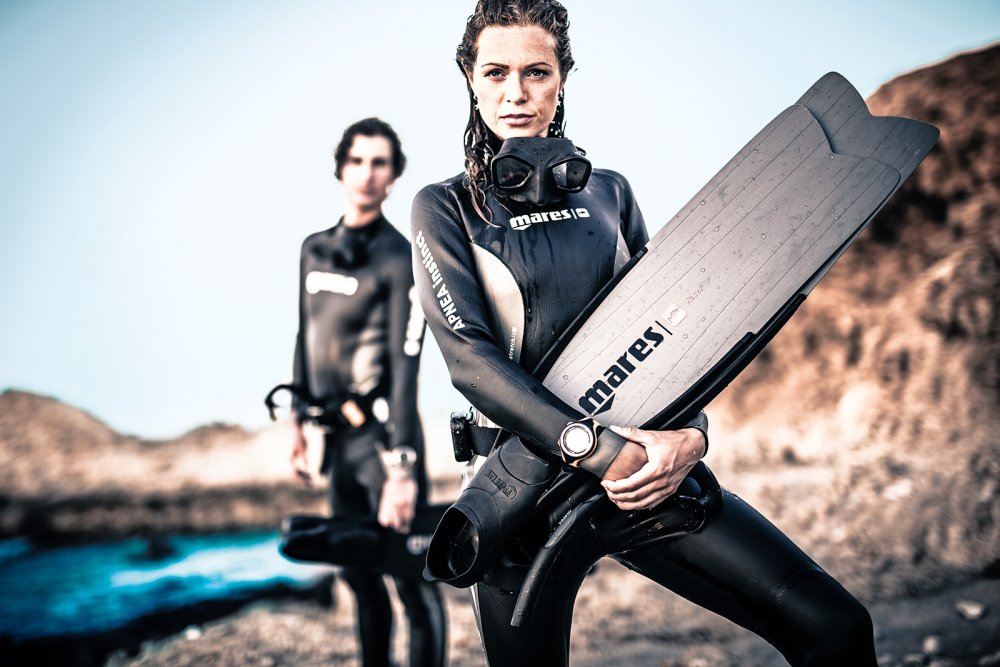
 © Mares
Explore Socorro Island
Socorro Island, located about 1,046 kilometers/650 miles west and offshore of Puerto Vallarta, along with San Benedicto Island, Roca Partida, and Clarion, make up the Revillagigedo Archipelago. Sometimes, these islands are called the “Mexican Galápagos”. This comparison to the Galápagos Islands off the coast of Ecuador is made with good reason; like the Galápagos Islands, the Revillagigedo Archipelago also has a volcanic history, a rich diversity of terrestrial and marine life including many endemic species, and is considered to be a national park, a marine reserve, and a UNESCO World Heritage Site. Since Socorro Island is the best-known island of the group, sometimes the Revillagigedo Archipelago is collectively called Socorro. Socorro is a must-see for lovers of megafauna, specifically marine mammals. Humpback whales, hammerheads, and whale sharks (oh my!) are frequent visitors of this island, and encounters with them while diving can be expected.
Due to the remote nature of these islands, their dive sites can only be explored via liveaboard dive boats that depart from the ports of Cabo San Lucas and San Jose del Cabo, Mexico. The ideal time to visit Socorro is in boreal winter and spring, with water temperatures generally no cooler than 21°C/69.8°F and at its warmest, 28°C/82.4°F. Socorro is recommended for experienced divers only, due to the strong currents and deep nature of most dive sites.
In general, many of Socorro’s dive sites consist of underwater pinnacles, which are column-like pointed rock structures. For example, Roca Partida, “Roca O’Neal”, and “The Boiler” are three popular dive sites with pinnacles as their focal point.
Top Socorro Island DIve Sites
Cabo Pierce
Located on Socorro Island's east side, Cabo Pierce is renowned for its frequent sightings of manta rays, dolphins, and humpback whales. It is suitable for advanced divers due to its depth and currents. Scuba diving is the primary activity here. This site is within a protected area, emphasizing the preservation of its vibrant marine life.
Punta Tosca
Also on the eastern side of Socorro Island, Punta Tosca offers thrilling encounters with dolphins, along with occasional sightings of silky, Galapagos, tiger, and hammerhead sharks. Parts of the site reach depths of 40 meters/131.2 feet, making it ideal for advanced scuba divers. It is part of an ecologically important zone, home to majestic megafauna.
Roca O’Neal
Known as Hammerhead Central, this site features a pinnacle that flattens at 10 meters/32.8 feet depth. Advanced divers can explore the cave below. Scuba diving is the main activity, with numerous shark species, including hammerheads, traversing the area. It is a notable spot for ecological diversity.
The Aquarium
Aptly named for its abundance of marine life, The Aquarium allows divers to get close to surface-whales. This site is suitable for both scuba diving and freediving, catering to intermediate divers. It showcases a diverse array of marine species in a vibrant underwater setting.
Roca Partida
Considered one of the best dive spots in Socorro, Roca Partida features a split pinnacle that rises 35 meters/114.8 feet above the water and plunges 40 meters/131.2 feet below. This site is fit for advanced divers, offering scuba diving experiences that include encounters with tuna, mackerel, marlin, manta rays, and various shark species. It is a key ecological zone, teeming with pelagic life.
The best Months to dive in Socorro Island
The best time of year to dive Socorro is from November to May, when the ocean conditions are at their calmest. Within this window, January through early April is when the surface water temperature is coolest (21–23°C/69.8–73.4°F), and when the probability of seeing Humpback whales is greatest. This is the time of year that Humpback whales breed and give birth around Socorro. Surface waters reach 26°C/78.8°F on either end of this window, November through January and April through May. While divers are less likely to encounter Humpbacks during this warmer time, it is better for seeing sharks and manta rays!
Visibility is normally very good at Socorro, with an average of 30 meters/98.4 feet and 40 meters/131.2 feet at its best. Depending on ocean conditions, weather, and surface ocean nutrient content, visibility can decrease to 15–20 meters/49.2–65.6 feet. Keep in mind that plankton blooms can significantly reduce visibility, and they commonly take place around the full moon.
Top Wildlife Sightings in Socorro Island
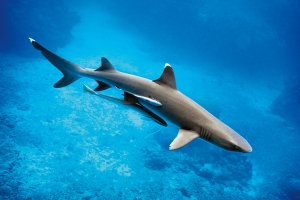
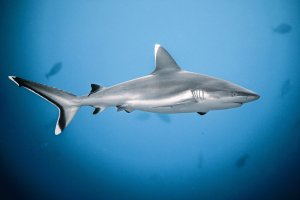
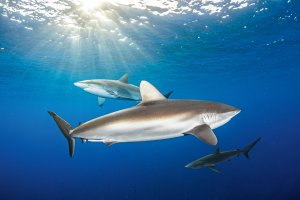
Socorro is considered to be one of the few places in the world where divers can swim with Humpback whales. Divers can also expect to encounter hammerhead sharks, whale sharks, dolphins, manta rays, and schools of large pelagic fish. Other shark sightings include silky, oceanic whitetip, silvertip, Galapagos, and tiger sharks. Because of this focus on megafauna, and seeing as the underwater landscape consists of mostly boulders and drop-offs, Socorro Island is not a place to visit to see coral reefs or smaller creatures that would normally be found in a reef environment.
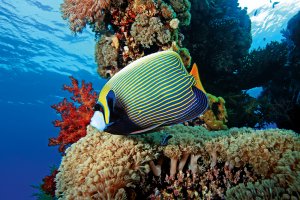
Encounters with manta rays are especially common at “The Boiler” dive site at San Benedicto Island. This is because the mantas gather here to be cleaned by the Clarion angelfish, with whom they have a symbiotic relationship. These fish get a full meal of parasites, and the mantas get clean and parasite-free bodies: a win-win!
As a national park, marine reserve, and UNESCO World Heritage Site, Socorro’s marine ecosystem is protected and is also the focus of various research and conservation efforts.
Wildlife Sightings are Based on User Generated Content
iStock/Divepic
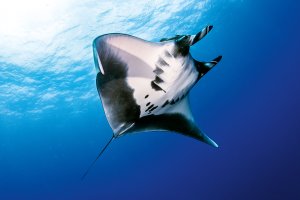
855 Sightings
J
117
F
125
M
140
A
102
M
123
J
35
J
10
A
1
S
0
O
0
N
86
D
116
Alamy-Christian Zappel
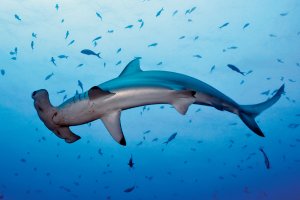
Scalloped Hammerhead
221 Sightings
J
36
F
41
M
51
A
29
M
9
J
13
J
7
A
1
S
0
O
0
N
3
D
31
AdobeStock/G Russel Childress
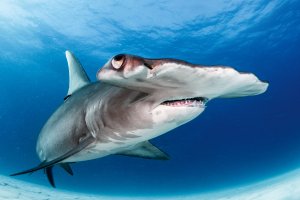
Great Hammerhead Shark
187 Sightings
J
8
F
41
M
27
A
38
M
20
J
0
J
0
A
0
S
0
O
0
N
34
D
19
Tobias Friedrich
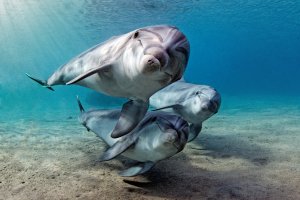
Bottlenose Dolphin
171 Sightings
J
22
F
25
M
36
A
16
M
15
J
5
J
2
A
1
S
0
O
0
N
21
D
28
Alamy/National Geographic Image Collection
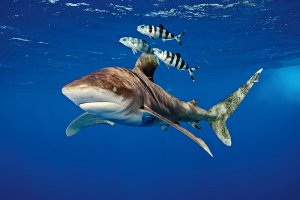
Oceanic Whitetip Shark
155 Sightings
J
1
F
18
M
37
A
39
M
20
J
7
J
0
A
2
S
0
O
0
N
4
D
27
AdobeStock-wildestanimal
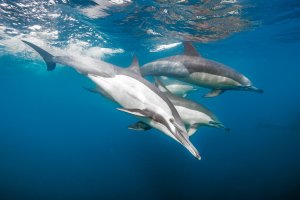
Common Dolphin
81 Sightings
J
10
F
8
M
37
A
7
M
15
J
2
J
2
A
0
S
0
O
0
N
0
D
0
iStock-crisod
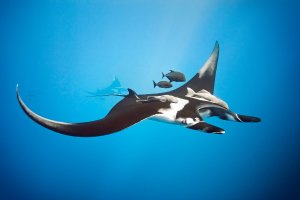
Reef Manta Ray
63 Sightings
J
0
F
0
M
27
A
13
M
14
J
3
J
1
A
0
S
0
O
0
N
5
D
0
The image shown is a representative illustration and does not depict every individual animal in this category.
Total number of species approx.: 200
Alamy-WaterFrame
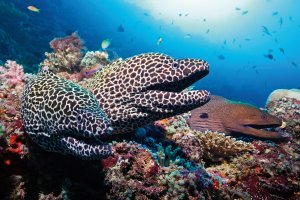
Moray Eel
62 Sightings
J
13
F
0
M
10
A
6
M
13
J
0
J
0
A
0
S
0
O
0
N
8
D
12
The image shown is a representative illustration and does not depict every individual animal in this category.
Total number of species approx.: 300
Alamy/Reinhard Dirscherl
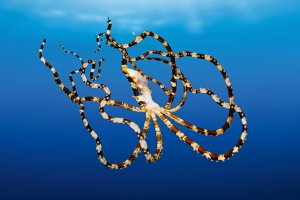
Octopus
37 Sightings
J
0
F
0
M
0
A
9
M
5
J
0
J
3
A
0
S
0
O
0
N
0
D
20
Alamy/Fiona Ayerst
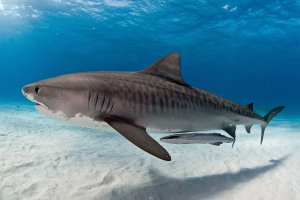
Tiger Shark
25 Sightings
J
0
F
0
M
0
A
0
M
0
J
2
J
0
A
0
S
0
O
0
N
23
D
0