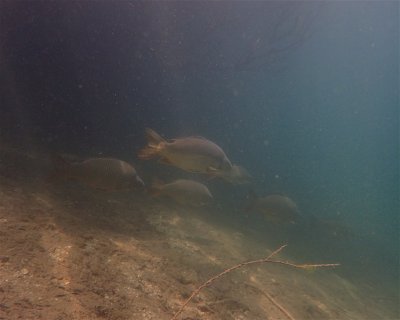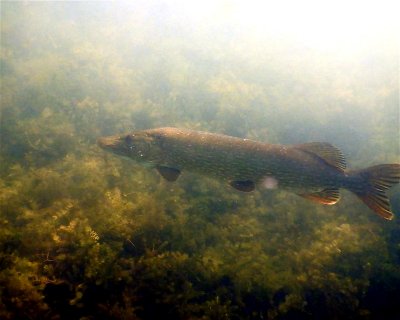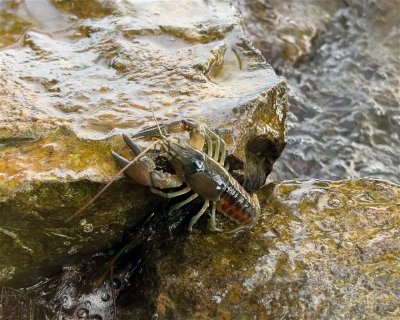
Originating from the carp family, Cyprinidae, the common rudd is indigenous to the freshwater lakes and rivers of Europe and Asia. Unfortunately, it is also widely spread throughout North America, where it is an invasive species called American, or pearl, roach. Within its natural distribution, the common rudd is usually found around the freshwater basins of the North, Baltic, Black, Caspian, and Aral seas.
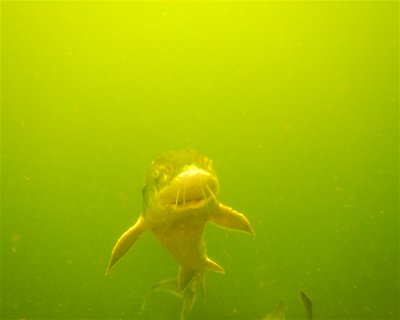
This schooling game fish prefers clear lakes and slow-moving rivers where it likes to hide in shallow, weedy areas to feed on the aquatic vegetation and insects. Dark red fins, yellow eyes, and a golden frame characterize the rudd’s stout body. They can grow to 35-40 cm and weigh up to 2 kilograms. Explore the map below to find the best dive sites where common rudd live.
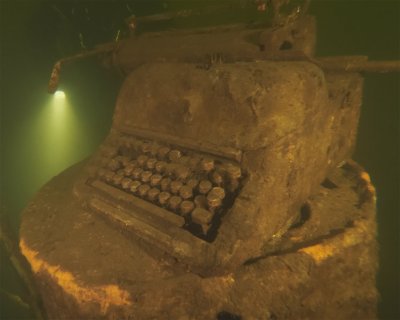
The largely still intact Conestoga is a 252-ft wreck in Cardinal, Ontario and is an excellent dive for all level, and exceptional night dive site. Easy shore entry leads you to a 25 m-line to the wreck. It is a shallow dive (28 ft approx.) and drift-friendly. Great site to practice a camera.
The entrance is on the camping site "Am Waldsee". The entrance is at a small sandy beach. From 7 m depth you will find gravel walls.
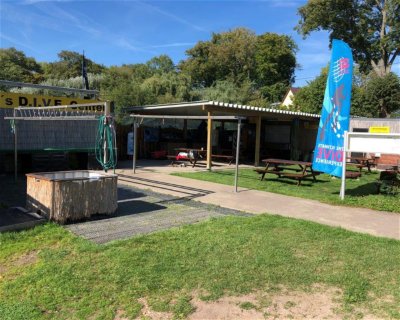
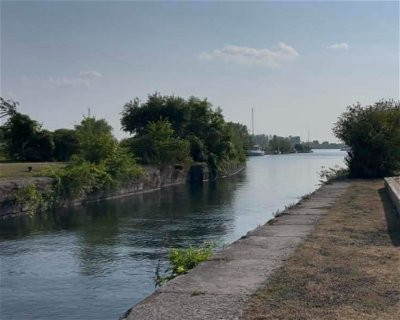
A few steps away from the diving center is a diving course. Here you can safely and comfortably board the boat at a slipway and a little later dive off the jetties. Underwater, a varied area with the most diverse destinations awaits you.
Set in a 70-hectare natural area, this 120-hectare lake is a former gravel pit redeveloped for swimming and leisure activities.
This dive site is commonly referred to as the Polish Dahab. The wonderful nature around the lake and underwater is really worth coming here and diving.
A 20-minute drive from the city center of Arnhem you will find this lovely freshwater lake. It has a maximum depth of 36 meters and a slow slope at the entry of the site. It is a great dive site for beginning divers and more advanced divers.