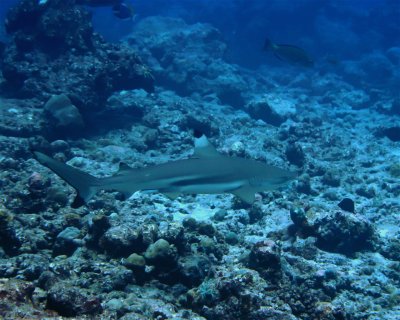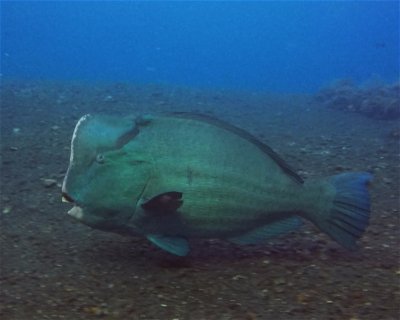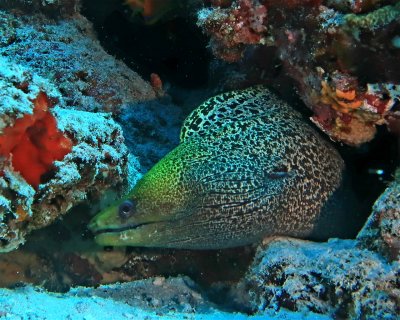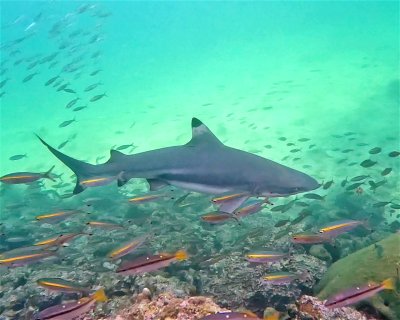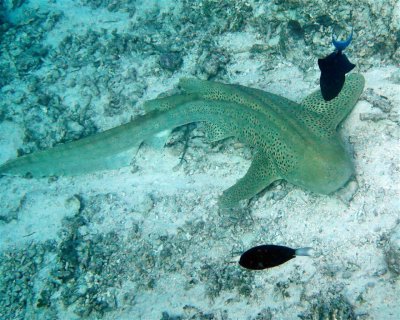
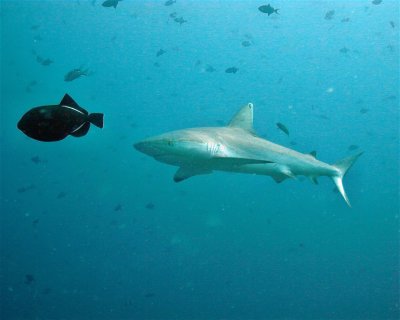
Not to be confused with its cousin, the oceanic whitetip shark, the whitetip reef shark prefers to spend most of its time resting in small caves and caverns amongst the reef. Unlike most requiem species, he does not need to swim continuously to breathe. They are similar to the nurse shark in that they can pump water over their gills to keep them freshly oxygenated, allowing whitetips the ability to lie on the ocean’s bottom or stay still, suspended in the water inside a small cave. If you are looking for them while scuba diving your best bet in finding them is to look into all of the caverns and overhangs.
They are nocturnal, coming out at night to hunt for food, so many night divers may encounter them swimming while night diving. They love to hunt fish, crustaceans, and octopus for food. These animals are considered non-aggressive towards humans and are generally not threatened by human presence, allowing divers excellent photographic opportunities. Whitetips are the most common reef shark in the Indo-Pacific region and can be found as far east as the Central American Pacific coast and as far west as South Africa. Click on the map below to find the best locations around the world to dive with them.
If you want to see anemones you have to come to this place,, there is a field with hundreds of anemones where we also can always find turtles. The Giri has approx. a diameter of 120m and is easy to dive around. Some nice small overhangs
This dive site is located right next to the island. The long reef ends into a corner of the canal. Here you can see several highlights. A very nice dive site for beginners as well as experienced divers.
BBT is a dive site that you can dive every day and each time you“ii find different conditions and creatures. The reef top starts at 5m, at 8 / 9m it drops down to 30m. There are some small overhangs in the western part of the Thila which are partly overgrown with soft corals.
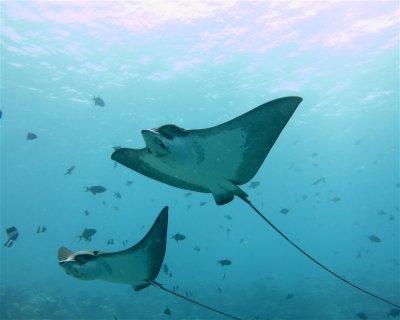
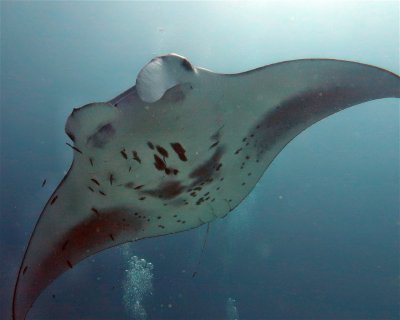
The reef top has something of a lunar landscape, despite or precisely because of this it is often a very special dive. The northern side often serves as a starting point when the current is draining from a steep wall over a sandy plateau to a normal slope. Manta rays between the end of September and November
One of the most colorful dive sites in North Male Atoll. On the south side of Girifushi island with abundant fish life and very nice soft corals, there are numerous blue soft corals and a swim through. The current can be strong!
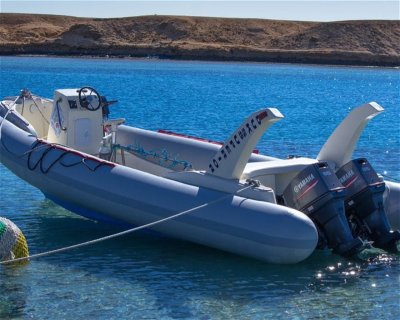
Aliwal Shoal is a fossilized Sand Dune with interesting and unique mountain like reef structures that holds many swim throughs, gullies and crevices to explore. The reef is only accessible by boat, there is no shore entries. The surf launch is part of the adventure. Boats are 8.5m Rubber Ducks/Ribb