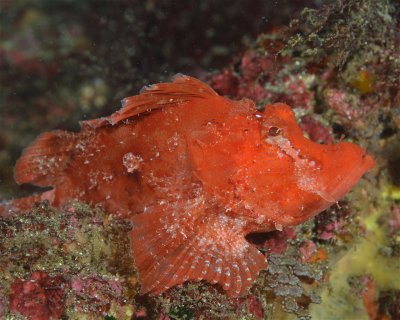
The ornately colored dragon moray eel, also known as the leopard or panther eel, is one of the most beautiful eels in the moray family. With vivid white spots set against its reddish-hued skin, the dragon eel is easily distinguishable. During the day, these nocturnal hunters like to hide amongst the rocky reef, so look for them in every crack and crevice during your dive. Thanks to their unique appearance, dragon eels are a favorite amongst underwater photographers.
You can dive with dragon eels throughout the Indo-Pacific region, from the Society Islands west to Hawaii and from southern Japan south toward New Caledonia. Their habitat includes coral and rocky reefs from 8 meters to 60 meters deep. Explore the map below to find the best dive spots where you can see dragon eels.
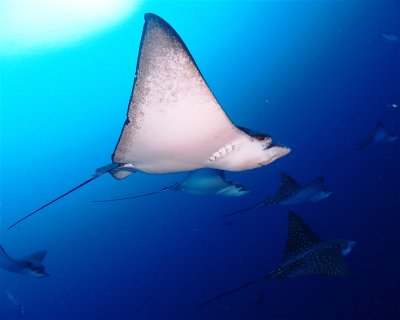
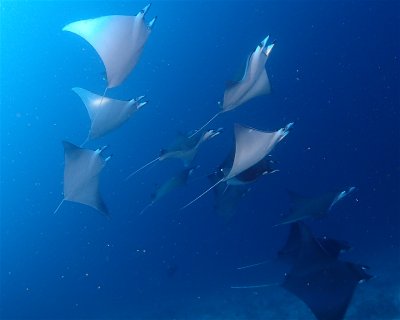
The reef top has something of a lunar landscape, despite or precisely because of this it is often a very special dive. The northern side often serves as a starting point when the current is draining from a steep wall over a sandy plateau to a normal slope. Manta rays between the end of September and November
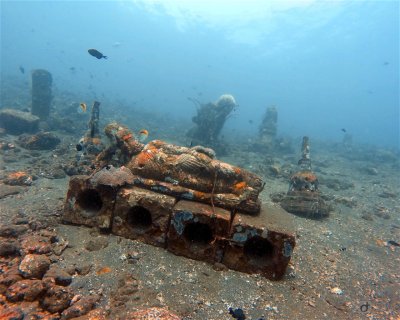
This is the only historical shipwreck in Bali, ranked #3 in the world for Wreck diving! The wreck is 25 meters form shore at a depth of 4 to 29 meters below the surface with most of it occuring in a shallow area. This dive site does not have strong currents, has clear water, and warm temperatures. Difficult entry!
This dive site has many names, Fish Tank, Fish Factory, Stingray City and they all fit! There is actually a fish factory on the island and this is the reason why there are so many rays and moray eels.
A very nice drift dive over several hundred meters along the island of Vandhoo. The top reef made of hard corals drops from 4 to approx. 8m, sloping down to 15m, then a 250m long wall that drops to over 30m +. On the TOP reef, between June and November, is a cleaning station for Mantas.
This site is the remnant of an old pier. It is a shallow site, no more than 30-35 feet of depth with a sandy bottom. The wreckage on the bottom provides an artificial reef for a large variety of marine life. Visibility ranges between 10 feet (if it has been raining) to over 50 or 60 feet.
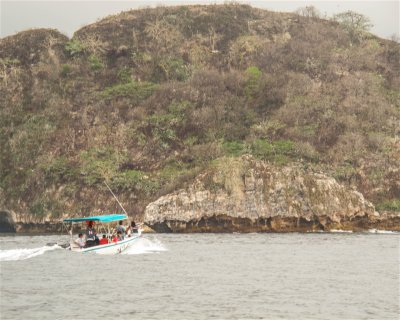
Los Arcos National Park is one of the most popular places to dive in Puerto Vallarta. Nestled in a cluster of granite islands in the southern part of Banderas Bay, this dynamic underwater world is full of places to explore like El Bajo and Devil’s Canyon. There’s lots of marine life to explore as well.