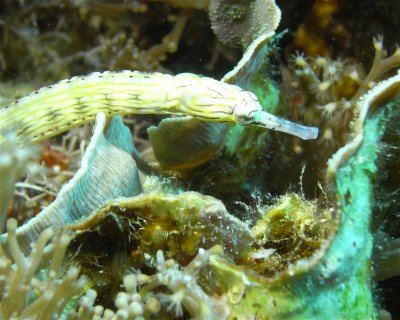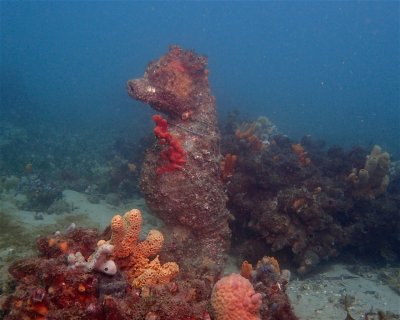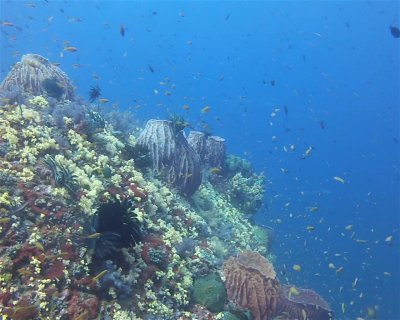
Shrimp is one of the most popular seafood choices on the planet; however, they are also just as fun to see in their natural habitat. There are nearly as many types of shrimp as there are ways to cook them, with approximately 2,000 different species. Part of the crustacean family, these relatives of crabs and lobsters are identifiable by their semi-transparent bodies, flexible abdomen, and fanlike tail used to swim backward.
Shrimp can vary in size from 4-8 cm (1.5-3 in) on average, and the larger species are often referred to as prawns. You can find shrimp roaming reefs and the seafloor along coasts and in estuaries around the world. Most shrimp species are marine; however, about a quarter of them live in freshwater. To see where you can go diving with shrimp, explore the dive site map below.
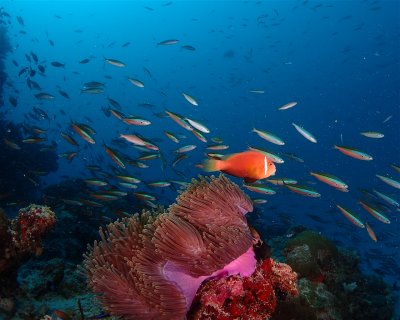
If you want to see anemones you have to come to this place,, there is a field with hundreds of anemones where we also can always find turtles. The Giri has approx. a diameter of 120m and is easy to dive around. Some nice small overhangs
The reef top has something of a lunar landscape, despite or precisely because of this it is often a very special dive. The northern side often serves as a starting point when the current is draining from a steep wall over a sandy plateau to a normal slope. Manta rays between the end of September and November
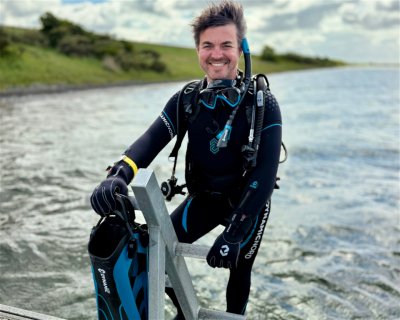
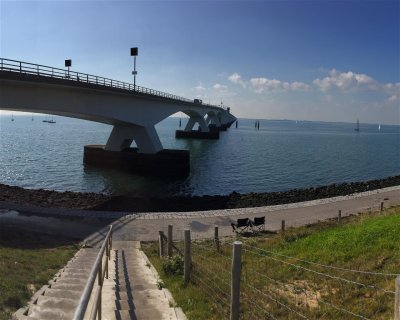
Dive site Kerkweg in Den Osse is one of the most famous dive sites in Zeeland. Here you can dive from the jetty on oyster beds, an artificial reef of reefballs and many other hard substrate that is nicely overgrown. The maximum depth is about 30 metres, but you will find most life in the shallow water.
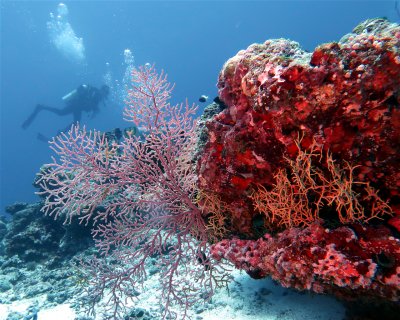
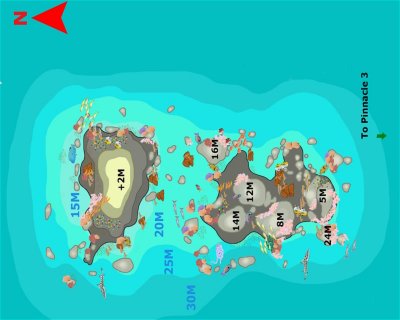
This amazing reef are 3 blocks. The biggest begins in the south between 80-100m long and it's full of corals, it would be nice we can start here. In the east we have another wonderful block a bit similar to east block Maya Thila covert full with corals. In the north is the smallest block. AOW or higher
A very nice drift dive over several hundred meters along the island of Kottefaru. The top reef is made of hard corals that drop from 4 to 8m, sloping down to 15m, then a wall that drops far more than 30m. On the top reef between June and November the site becomes a cleaning station for mantas.
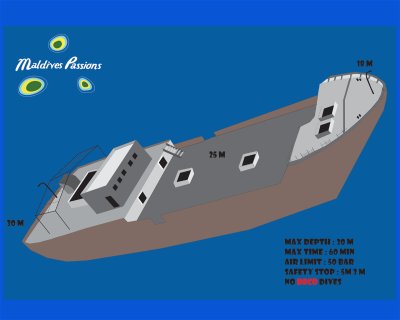
This is the only historical shipwreck in Bali, ranked #3 in the world for Wreck diving! The wreck is 25 meters form shore at a depth of 4 to 29 meters below the surface with most of it occuring in a shallow area. This dive site does not have strong currents, has clear water, and warm temperatures. Difficult entry!