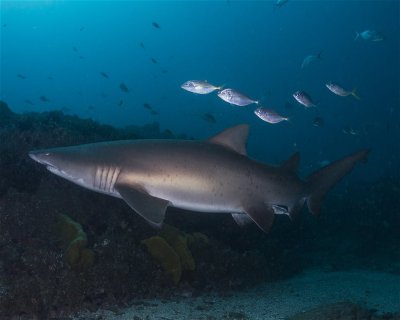
Sand tiger sharks may be the most ferocious looking of all the sharks due to their rows of jagged, sharp teeth that protrude in all directions, even when their mouths are shut. However, not to be confused with their cousin the tiger shark, they are actually non-aggressive and extremely docile. Due to their calm demeanor, scuba diving with sand tiger sharks is a common and enjoyable experience. Nevertheless, as with any species, you should be careful when diving with sand tiger sharks and treat them with respect.
Sand tiger sharks are unique in that they are the only species that can swallow air. Since sharks do not have a swim bladder, they have to keep moving so as not to sink. The sand tiger shark stores the swallowed air in its stomach, allowing them to float motionless in the water. These animals may look threatening, but it’s a fun experience to go diving with sand tiger sharks. Find out where to scuba dive with these animals here.
Aliwal Shoal is a fossilized Sand Dune with interesting and unique mountain like reef structures that holds many swim throughs, gullies and crevices to explore. The reef is only accessible by boat, there is no shore entries. The surf launch is part of the adventure. Boats are 8.5m Rubber Ducks/Ribb
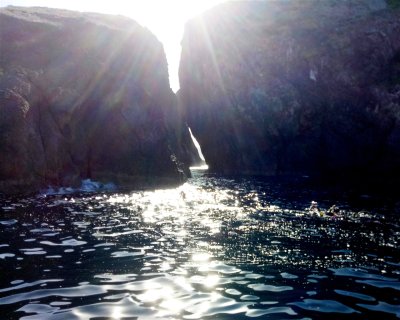
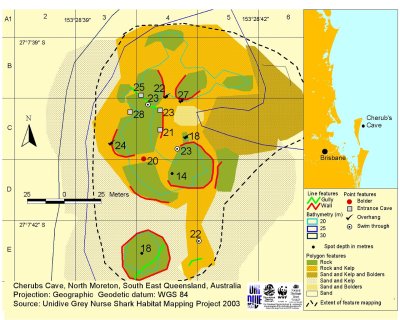
Part of the Great Lakes Marine Park, is a sanctuary for endangered grey nurse sharks. Dive between the “crack“ in the island for incredible topography in an unforgettable dive site.
Amphitheatre’s name says it all, divers can just observe the living color. Schools of marine life deliver the most brilliant show. Maximum depth is 27m with the top of amphitheatre at 18m.
This site is named Castle because of its pinnacles and castle like structures with swim throughs, gullies, and overhangs to explore. Maximum depth is 25m and the top of the reef is 12m deep.
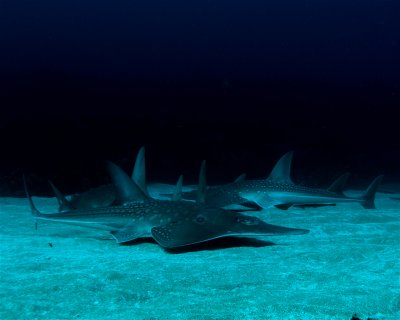
South Sands consists of a large sand patch surrounded by reef structure. Maximum depth is 14m with an average depth of 11m. This is the perfect dive site to spot large groups of Rays or Guitar sharks.
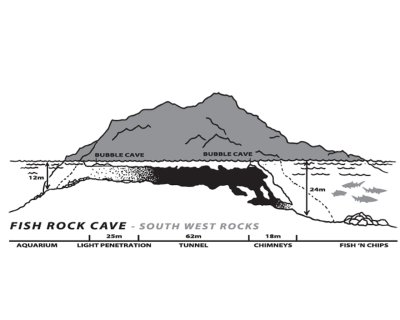
Fish Rock Cave is the only true ocean cave dive in Australia, running 125 meters right through Fish Rock. Fish Rock is in the path of the EAC (East Australian Current) which usually floods the site with warm clear water, bringing a huge variety of temperate and tropical marine species.