Explore Vis

Vis is an island located off of the Dalmatian Coast of Croatia, located in the North Adriatic Sea. This island is often visited by those wanting to admire the history of the island, but there is also a lot to be seen underwater. The calm, clear waters here provide divers with a wide range of diving experiences which are bound to excite divers with all sorts of interests. There are currently six dive centres on the island that will show divers the many dive site gems which lie underwater here. If divers prefer diving from liveaboards, then there are also multiple options for those in this region. Divers will have the opportunity to see some of the best that the North Adriatic Sea has to offer including steep reef walls and drop offs, caves and canyons and a collection of different types of wrecks that are bound to excite all levels of divers. Almost every dive site will feature some beautiful pops of colour of the flourishing marine life which are present in these waters.

Upcoming Events

Triton Bay - West Papua

Triton Bay - West Papua

An Intimate Safari – 9 Days Aboard the Seven Seas SchoonerDeadline: March 16–30, 202724 Dives in Indonesia’s Wildest Regionssurreal, colorful reefs, big stuff, massive schools of fish, and the amazing world of macroInstructors: Piotr Stós and Dominika AleksanderekLAST SPOT AVAILABLE - MEN'S CABINTriton Bay doesn’t end up on a scuba travel itinerary by chance. It’s more of a destination that comes up once you’ve seen a lot and start wondering what’s next… Anton, the manager of the White Manta boat, told us about it. As we were leaving Raja Ampat, still dazzled by its natural beauty, he looked at us intently and said, “Do you want to see what Raja was like fifteen years ago? Head to Triton Bay!” And off we went…This is a destination you choose consciously. It lies in the remote Kaimana region of West Papua. Unlike Raja Ampat, which is already fairly well-known and increasingly visited, Triton Bay remains a rarely explored destination. And you can tell that from the very first dive. It’s a corner of the world that, until 2006, remained off the main diving circuit. Not because it’s any less spectacular—quite the opposite. It’s simply harder to get here. The result is that we find ourselves in a place where the reef isn’t “showcased” to tourists, but simply exists in its natural, unspoiled form. You can feel it underwater from the very first dive. Plenty of life, plenty of color—just like in Raja Ampat—and plenty of plankton that attracts a vast number of organisms that thrive on this “fertile soup.”Why Tryton Bay?The Kaimana region and Triton Bay are located within the so-called Coral Triangle, the most biologically diverse marine area on Earth. It is part of the Bird’s Head Seascape, which is as significant to marine biologists as the Amazon is to terrestrial naturalists.The first comprehensive research of this region was conducted relatively recently. The results were so spectacular that a marine protected area was quickly established here. Since then, Triton Bay has slowly begun to appear on the world’s diving map, but it remains a destination for those seeking something less obvious. This region is characterized by extensive soft coral gardens, black corals, large schools of reef fish, and the presence of larger predators.Triton Bay Through the Eyes of DiversUnderwater photographer and expedition guide Alex del Olmo recalled that he fell in love with this place within seconds of being underwater. And it’s hard to blame him—this is one of those areas where you can still feel the spirit of exploration. The shallow parts of the reef are well-lit, teeming with healthy corals and fish, yet there’s no shortage of more challenging spots here, with currents and dynamic topography. One of the most interesting aspects is the variety of experiences you can have during a single trip. Depending on the day and location, you can expect encounters with larger animals such as whale sharks, dolphins, or oceanic manta rays (outside the bay itself), as well as excellent macro dives, with plenty of seahorses and other small organisms.There are places there that are particularly memorable:• Pintu Arus – an area known for its currents and exceptionally lush soft corals• Little Komodo – a dynamic, colorful dive with an abundance of marine life• Pulau Dramai – home to schools of snappers, fusiliers, carangids, and barracudas.These are the reefs you’ll want to spend a long time exploring—ideally during 70-minute dives ????Top Diving Attractions• encounters with whale sharks near bagan platforms (bagans are traditional Indonesian fishing platforms. Simple wooden structures set out at sea or anchored in one place. Whale sharks are attracted there by the light used by fishermen to lure schools of fish)• vast soft coral gardens• black corals and varied topography• schooling reef fish and predators• wobbegong sharks and epaulette sharks• macro diving (seahorses, nudibranchs)Who is this trip for?For divers who:• already have experience and want to see something less obvious• are interested in both large animals and macro life• are looking for an intimate atmosphere (14 spots)Diving Requirements• a minimum of 50 dives• AOWD level or equivalentDiving Conditions• water temperature: 27–30°C• visibility: 10–30 m• currents: mild to strong• level: intermediate to advanced

NAUTICA SAFARI, TORUNSKA 5, 30-056, KRAKOW, POL
March 16, 2027
$1,574.02
PLN 6,300.00
Laguna Truk

Laguna Truk

Diving TripThe Largest Underwater Museum of World War IIFebruary 19 – March 3, 2028 (subject to a 1–2 day adjustment)Instructors: Piotr Stós and Dominika Aleksanderek12 wreck dives in the tropical waters of MicronesiaMicronesia—a tiny island nation in the Eastern Caroline Islands archipelago. The goal of our expedition is to explore the Japanese shipwrecks that have lain in Truk Lagoon—the Ghost Fleet—for 75 years. Their sheer number, as well as their state of preservation, attracts underwater photographers, filmmakers, recreational divers, and technical divers from around the world. Diving among the coral-covered wrecks of the Imperial Fleet, we get the impression that time has stood still. Tanks and cannons stand on the decks, the holds are filled with ammunition and spare parts for the weapons, and plates and sake bottles lie in the galleys. It seems as though the instruments in the engine rooms still display pressure and temperature… Only the schools of fish that have taken over the ships bring this place back to the present, real world. We are in a unique World War II museum, a dream destination for wreck diving enthusiasts.Join us on an adventure!Exotic locations, reefs, wrecks, history. Four words—the keys to our expedition.Do wreck dives on Truk require special qualifications?Some of the lagoon’s wrecks lie at depths ranging from 15 to 30 meters. To visit them, an AOWD certification from any diving organization is sufficient. For dives to deeper wrecks, a Deep certification or technical diving qualifications allowing for decompression dives are required. Due to the long bottom times, a nitrox diver certification is very useful (you can take this course on-site with the trip leader).The dive center was founded by Kimiuo Aiseka in 1973 and remains in the hands of the Aisek family today; it serves divers of all skill levels, including technical and rebreather divers. The resort provides stage tanks as well as nitrox and trimix. During dives, divers perform deep penetrations into wrecks. The decision to navigate enclosed spaces devoid of natural light depends on the training and experience of the dive team. The dive plan is always adapted to the participants’ skill level, taking their comfort and safety into account.The wrecks of Truk Lagoon, brought to the attention of the diving world by Jacques Cousteau in the 1960s, form a fascinating underwater museum. Let’s highlight just a few of the vessels best known to divers:Aikoku Maru, depth 24–64 m. The explosion completely destroyed the forward cargo section; on deck, you can see two anti-aircraft guns, as well as a commemorative plaque and monument installed there on February 17, 1994, honoring the victims of Operation Hailstone.Betty Bomber, depth 18m. An intact bomber with a large entrance, allowing divers to swim inside the fuselage. On the outside, you can see, among other things, a radio and a machine gun. Near the wreck are two engines, several damaged fighter planes, a large machine gun, and a torpedo launcher.The Emily Flying Boat lies at a depth of 18 m. It is the largest airplane wreck, and most of its equipment is still in place, including the pilot’s seat and the instrument panel.Fujikawa Maru, depth 30 m. The most popular wreck; inside, it houses “Zero” fighter planes and machine guns. There is an interesting workshop in the engine room.Gosei Maru, depth 30 m. This small coastal freighter sank with a cargo of 8-meter torpedoes, warheads, and unexploded ordnance. On the next level, you can explore the engine room and galley. A photogenic propeller covered in soft corals.The Heian Maru lies at a depth of 28 meters. The largest wreck in the lagoon. Built in 1930 as a large passenger ship, it was converted into a submarine supply ship and commissioned into the Navy in 1941. Hit by a torpedo, it sank quickly with its holds full of bombs and submarine parts.The Hoki Maru lies at a depth of 43 m. An explosion split the wreck into two parts; in the cargo holds, you’ll find depth charges, trucks, tractors, and heavy construction equipment.I-169 Submari, depth 43 m. A submarine that participated in the attack on Pearl Harbor. It survived Operation Hillstone. It later sank on April 4, 1944, during an emergency dive following a warning of another American air raid—the crew failed to close the main hatch, and the forward compartment flooded. Despite attempts to rescue them, the crew could not be saved. The only survivor from the submarine’s crew was the captain, who was on the island at the time of the attack. After the attack, the wreck was further damaged by the Japanese and lost its bow section.Kansho Maru, depth 30 m. Below deck, we can visit the easily accessible engine room and galley, and see the bathrooms, telegraph, radio, and bicycle storage area. You can easily exit through the opening at the stern.
NAUTICA SAFARI, TORUNSKA 5, 30-056, KRAKOW, POL
February 19, 2028
$737.04
PLN 2,950.00
Indonesia – Derawan

Indonesia – Derawan

Safari with underwater photography in the backgroundDeadline: May 17–27, 202818 dives on a premium-class boat cruise—White MantaMaratua: lionfish, reef sharks, and huge schools of barracuda and trevally. Sangalaki: manta rays and green sea turtles; Kakaban’s walls and a saltwater lake inhabited by thousands of jellyfish. And on top of that, the macro world—nudibranchs, shrimp, crabs, and seahorses.Instructors: Piotr Stós and Dominika AleksanderekDivingYou’ll have to spend a moment exploring the map to find the Derawan Archipelago, which lies off the eastern coast of Borneo in the Celebes Sea, far from Indonesia’s most obvious diving routes. It’s still a relatively unexplored region of Indonesia, and that’s exactly why we want to take you there.Sangalaki is known for its manta rays. Maratua is known for its currents, channels, and massive schools of fish. Kakaban is known for its steep walls covered in giant gorgonians and its jellyfish lake. Green sea turtles can be found around Derawan. And in between them lies the entire Celebes Sea: reef sharks, eagle rays, tuna, trevally, barracuda, macro life, and reefs where there’s truly plenty to see.We’ll start with Sangalaki, a small island known primarily for its manta rays. The waters here are rich in plankton, which is why manta rays appear near the island regularly, both at cleaning stations and while feeding. Sangalaki is also one of the most important nesting sites for green sea turtles in this part of Indonesia.Maratua offers a unique diving experience. Currents flow through the channels and along the outer walls of the reef, attracting large fish. Huge schools of barracuda and trevally can block the entrance to the channel like a living wall. There are also reef sharks, eagle rays, and tuna…Kakaban offers steep reef walls and a place we won’t explore with a regulator in our mouths: we’ll walk through a tropical forest to a lake inhabited by jellyfish. The lake was formed about 11,000–12,000 years ago. Today, it is home to thousands of jellyfish that, over millennia of isolation, have adapted to life without large marine predators and, consequently, without stinging cells.Also on the White Manta route is Sambit, with its reefs, large numbers of sea turtles, and the possibility of encountering sharks, as well as diving in the area of traditional fishing platforms known as bagans. Whale sharks sometimes appear near them. We can’t list them as guaranteed attractions, but we’ll be on the lookout for them!This is one of those routes where one day we’re on the lookout for manta rays and sharks, the next we’re surrounded by thousands of barracudas, and the day after that we’re photographing a tiny seahorse.What will you see underwater?manta raysschools of barracudas and trevallygreen and hawksbill sea turtlesreef sharks, whiskered sharks, and dogtooth sharkseagles, tunarich reefs and vertical wallsmacro: nudibranchs, shrimp, crabs, and other small creaturesunder favorable conditions – whale sharksM/V New White Manta ExplorerThe White Manta is a 46-meter premium-class steel boat, built specifically for divers. It’s big. And here, “big” really means something: 10 meters wide, a spacious dive deck, separate stations for underwater photographers, plenty of room for cameras and video cameras, and several decks where you can disappear after a dive and shamelessly take a nap.We have the following available:large, air-conditioned cabins with private bathrooms,a comfortable dive deck with individual stations,a photo corner with space for equipment and charging,dining room and bar,a sun deck and shaded relaxation areas,three dive boats,nitrox,warm towels and drinks after a divelaundry service (laundry basket: $10)Cabins21 passengers in 11 air-conditioned cabins spread across three decks. All cabins have private bathrooms with showers.6 cabins on the upper deck4 cabins on the middle deck1 cabin on the lower deckInformation about the boatOverall length: 46 metersWidth: 10 meters Main engines: 2 × Cummins 450 KM Generators: 3 × Cummins Speed: 10 knots Range: 1,500 nautical milesThe TeamThere are about 20 crew members on board, including local dive guides. The large number of guides allows divers to be divided into small groups and dives to be tailored to their experience and the conditions.SafetyThe vessel is equipped with life rafts and life jackets, an EPIRB, flares, first-aid kits, and an oxygen supply for diving and medical emergencies. The cabins are equipped with a fire suppression system and smoke detectors.Air SystemsThree compressors and a membrane system for producing nitrox up to 32%.Transportation to dive sitesThree rigid-hulled pontoon boats.

NAUTICA SAFARI, TORUNSKA 5, 30-056, KRAKOW, POL
May 17, 2028
$5,496.56
PLN 22,000.00

Dive Activity

Diving in Vis

Diving around the island of Vis means having the opportunity to experience a wide range of different types of diving for divers of all levels. If novice divers are hoping to increase their underwater skills by doing dive courses in the calm waters, then there are many options for that. If divers want to relax above and below the water then there are multiple dive sites which contain a plethora of marine species to be admired while floating along the crystal clear waters. For the thrill seekers there are multiple wrecks which lie at different depths for recreational and technical divers to explore and penetrate to dive into history such as the Vasilio T and Teti wreck. Other dive sites are made up of interesting rock topography with steep drop offs, caverns, swim throughs and caves, with one highlight dive site being the Blue Cave.

Dive Centers

Dive Sites

The best Months to Dive in Vis

Croatia has a Mediterranean climate which means hot summer winters with a lot of rain. The air temperatures here range between a cold 8°C in the midst of winter, between December and February, and reaches up to 26°C in the summer months of July and August. The peak diving season lies between May and September when the waters are the most calm, the most clear and the warmest, with the least amount of rain and the least amount of currents. The water temperature here ranges between 12°C and 24°C and the visibility is on average good throughout the year and ranges between 10 metres and 35 metres on the best days.

Top Wildlife Sightings in Vis

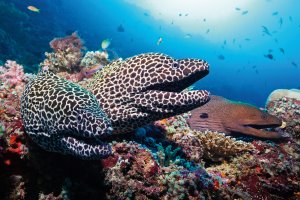
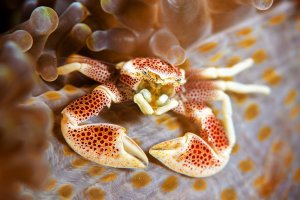
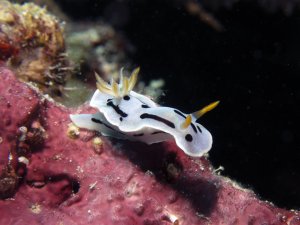
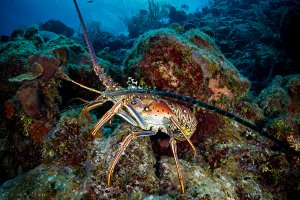
Divers are almost bound to be impressed by the colours of the underwater world here which are thanks to the thriving coral reefs and the many species which inhabit them. The marine flora includes many species of Hard Corals, Soft Corals, Sea Fans, Sea Sponges, Anemones, Mediterranean Gorgonians, Red Gorgonians and many more! The species which either live among, or feed off of, these reefs include Conger Eels, Moray Eels, different species of Crustaceans such as Crabs, Shrimps and Lobsters, Sea Stars, Scorpionfish, colourful Nudibranchs, majestic Nudibranchs and that’s just the tip of the iceberg. There are also many species of fish which either congregate as schools or as individuals and they include John Dories, Rainbow Wrasse, Goldfish, Damselfish, Dentex, Amberjacks, Mullet and Bluefish. This may not be the location to go to see large species, but if colourful reef species is what peaks divers interests, then this is the place to go.

Wildlife Sightings are Based on User Generated Content

The image shown is a representative illustration and does not depict every individual animal in this category.

Total number of species approx.: 200

Moray Eel

Moray Eel

1.3k Sightings
J
2
F
0
M
1
A
12
M
46
J
114
J
353
A
327
S
283
O
116
N
2
D
0

The image shown is a representative illustration and does not depict every individual animal in this category.

Total number of species approx.: 300

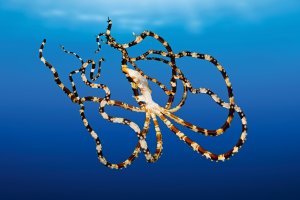
Octopus

Octopus

547 Sightings
J
1
F
0
M
1
A
2
M
20
J
81
J
136
A
182
S
107
O
15
N
1
D
1

The image shown is a representative illustration and does not depict every individual animal in this category.

Total number of species approx.: 27

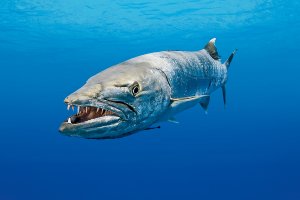
Barracuda

Barracuda

64 Sightings
J
1
F
0
M
0
A
0
M
3
J
0
J
27
A
27
S
0
O
6
N
0
D
0

The image shown is a representative illustration and does not depict every individual animal in this category.

Total number of species approx.: 250

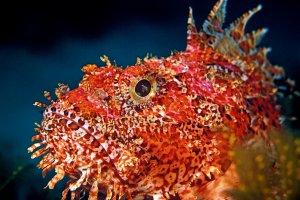
Scorpionfish

Scorpionfish

715 Sightings
J
0
F
0
M
0
A
10
M
25
J
91
J
186
A
200
S
167
O
34
N
1
D
1

The image shown is a representative illustration and does not depict every individual animal in this category.

Total number of species approx.: 100

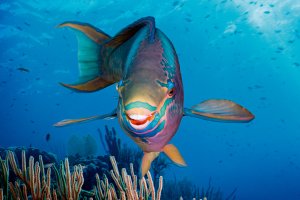
Parrotfish

Parrotfish

150 Sightings
J
0
F
0
M
0
A
0
M
3
J
25
J
30
A
72
S
20
O
0
N
0
D
0

The image shown is a representative illustration and does not depict every individual animal in this category.

Total number of species approx.: 190

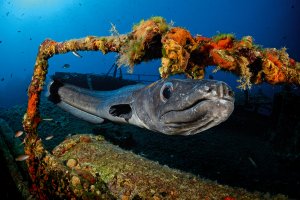
Conger Eel

Conger Eel

112 Sightings
J
0
F
0
M
0
A
0
M
3
J
14
J
22
A
33
S
29
O
8
N
2
D
1

The image shown is a representative illustration and does not depict every individual animal in this category.

Total number of species approx.: 250

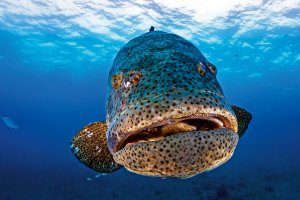
Grouper/Basslets

Grouper/Basslets

78 Sightings
J
0
F
0
M
0
A
0
M
1
J
19
J
8
A
30
S
10
O
10
N
0
D
0

The image shown is a representative illustration and does not depict every individual animal in this category.

Total number of species approx.: 3000

Nudibranch

Nudibranch

71 Sightings
J
2
F
0
M
0
A
0
M
3
J
14
J
20
A
13
S
6
O
13
N
0
D
0

The image shown is a representative illustration and does not depict every individual animal in this category.

Total number of species approx.: 60

Spiny Lobster

Spiny Lobster

49 Sightings
J
0
F
0
M
0
A
3
M
25
J
16
J
4
A
0
S
0
O
1
N
0
D
0

The image shown is a representative illustration and does not depict every individual animal in this category.

Total number of species approx.: 12

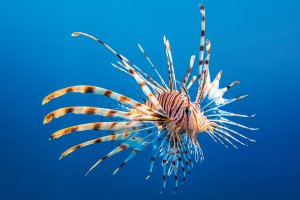
Lionfish

Lionfish

49 Sightings
J
1
F
0
M
0
A
0
M
4
J
0
J
6
A
35
S
3
O
0
N
0
D
0

The image shown is a representative illustration and does not depict every individual animal in this category.

Total number of species approx.: 7000

Crab

Crab

38 Sightings
J
0
F
0
M
0
A
0
M
0
J
4
J
12
A
0
S
22
O
0
N
0
D
0

Curated by Interest

Events by Lifestyle Category

Group Trips