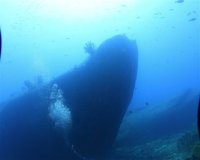
Explore dive destinations around the world. Whether you are planning a relaxed dive holiday or an adventurous dive trip, here you find the perfect location shaped by the ocean.
Discover marine wildlife and iconic dive sites worldwide. Whether you are drawn to coral reefs, wrecks, or big marine life, explore where divers dive and what lives beneath the surface.
Connect with certified dive centers and professional instructors worldwide. Whether you’re a beginner or experienced diver, find the perfect location to learn, explore, and enhance your diving skills.
Experience the ultimate diving adventure aboard world-class liveaboards. Explore remote dive sites, enjoy multiple dives per day, and wake up in paradise at some of the planet’s most incredible underwater destinations.
Discover dive sites around the world where activity is at its peak right now. Whether you are searching for exceptional wildlife encounters or the right dive season, here you find where the action is happening beneath the surface.
For liveaboard trips, we partner with LiveAboard.com to offer the widest selection of dive safaris worldwide.
Liveaboard diving holidays pack more diving in the same trip and allow divers to explore far-flung dive areas and see more marine life in the most beautiful dive destinations of the world.
Whether its wildlife tours, cultural visits and scenic hikes you are after or idyllic shores, swim stops and wonderful meals on board, an adventure cruise offers an amazing experience you won’t easily forget.
With nearly 24,000 km of coastline throughout England, Scotland, and Wales, there is no shortage of diving in the United Kingdom. Sitting just off the northwest coast of Europe, the UK is surrounded by the temperate waters of the Atlantic. Although diving in the UK is not typically found at the top of most people’s bucket lists, most divers are surprised by the fantastic sights found under the waters surrounding this great kingdom. With an extensive maritime history, the United Kingdom is a wreck diver’s paradise. You can find historic wrecks throughout the UK, making tec diving particularly popular here. The swift-moving, nutrient-rich waters of the UK attract extraordinary marine life encounters like seals and basking sharks. Come discover the thrill of diving in the United Kingdom today!
Diving in Africa you can explore the wonders of the Red Sea or discover hidden gems like St. Helena Island.
Some of the world’s most paradisiac diving destinations in Asia can be found in Indonesia, Maldives, Malaysia, the Philippines, and Thailand.
Das Great Barrier Reef, das größte Korallenriff der Welt, ist der Inbegriff des Tauchens in Australien.
Diving in Occitanie – Discover the best scuba diving in France!
North America offers a wide variety of adventures for every type of diver such as ice diving in Alaska or cenote diving in Mexico.
Some of the top diving destinations in Oceania include Micronesia, Fiji, Polynesia, Palau, Guam or the Marshall Islands.
In South America, you will find plenty of dive sites to choose from, including Ilhabela, Abrolhos Archipelago, and Easter Island.
Explore scuba diving in the Atlantic Ocean – from temperate reefs to pelagic encounters. Discover top dive sites, conditions and marine life.
Discover scuba diving in the Baltic Sea, famous for historic wrecks and cold-water conditions. Learn where to dive and what to expect.
Experience world-class scuba diving in the Caribbean with vibrant reefs, walls and warm water. Explore the best dive destinations and conditions.
Explore scuba diving in the Indian Ocean, home to tropical reefs, sharks and clear waters. Discover top dive destinations and seasons.
Discover scuba diving in the Mediterranean Sea, from historic wrecks to caves and clear coastal waters. Find the best dive sites and seasons.
Explore scuba diving in the Pacific Ocean, known for vast reefs and big marine life. Discover top dive regions and underwater experiences.
Experience scuba diving in the Red Sea, famous for vibrant coral reefs and crystal-clear water. Discover the best dive sites and conditions.
Dive into the water with just one breath and be one with nature - this is freediving, when meditation meets self-endurance. A quiet mind, calmness and willpower are key elements to push your own limits. If you manage to do that, you will be rewarded with an amazing experience underwater. You can swim alongside orcas, seals and sharks, explore ancient shipwrecks and go as deep as you can. Some of the best freediving places can be found in the Caribbean, Southeast Asia but also in the cold waters of Europe. Whether you’re a beginner or an export in the sport, there is something for everyone.
Based on dives logged by our community in the past 2 weeks
Great site for training dives as there is a big sandy area ranging from 1m to 16m deep. There are two different areas of huge artificial reef concrete cubes good for buoyancy or tech training. An abundant and dense hard coral reef area is on the east side and rocky sloping reef is on the west side.
30 to 45 minutes southwest of Koh Tao, these large pinnacles range from 30 to 5 m. Sandy ocean floor with big rocks on the south side. many cracks on the pinnacles where small wildlife can be found. The shallower parts of the pinnacles are covered in magnificent anemones.
One of the most famous dive sites on Koh Tao, this site features something for every experience level. Ranging from 5 to 19 meters, Twins is located just off the western side of picturesque Koh Nanguan and is a favorite of students and leisure divers alike.
Japanese Gardens enjoys the protection of Koh Nanguan, which generally makes it a very calm and easy site. The depth ranges from just a couple meters to about 16 meters.
White Rock, also known as White Rock and Black Rock, is located to the south of Nan Yuan Island, adjacent to Koh Tao. The whole site is a fairly large root, so no matter how many dives you do, you will never get bored of it, depending on the course you take, the depth and the type of life you observe. Beginners and seasoned divers alike should enjoy it.
The main pinnacle of Chumphon Pinnacle comes as shallow as 14 meters and the deepest point of the site goes as deep as 45 meters. Offering great opportunities for divers at Open Water level through to XR level.
Located on the west-side of Nusa Penida Island, Crystal Bay has two coral reef formations separated by sand slopes. The combination of slopes and walls that form the topography at this dive site goes down to more than 50 meters and meets with large rock which is an ideal place for a cleaning station for sunfish.
A steep slope on the north side of Gili Trawangan, from 5m down to 24m with a series of gullies at the bottom. A series of gradually deeper ridges running parallel to the beach is located between 25m and 40m.
Located on South East of the island. This dive site has shallow water that is good for training dives and practice buoyancy. The dive site is sheltered, so you can dive in a calm and stable environment with no waves.
Sail Rock is a pinnacle which rises to 15m above and 40m below the surface. Sail Rock lies between Koh Phangan and Koh tao. It’s famous for its natural underwater vertical swim through or chimney which divers can enter at 6 metres and exit at 18.
Freshwater Amphibians: Expert Divers Beneath the Surface
The Architects of the Reef
Critters of the Sea
“Humans” of the Underwater World
Living Stars of the Sea
Dominators of the World’s Lakes and Rivers
Mesmerizing Movers
Diverse Ocean Dominators
Curious, Playful, and Cute
Gentle Movers of the Sea
Making the Oceans a Rainbow of Color
The Best Dads in the Sea
Kings of the Oceans
The Most Majestic and Ancient Ocean Swimmer
Record Holder of the Seas
This is one our favourite dive sites since it has the widest range of wildlife. The reef gently slopes down from the island apart from the wall at the south west which drops 22-26 meters.
King Cruiser is rated as one of the best wreck dive sites in Asia, certainly Thailand. Having sank on May 4th in 1997 this is an amazing wreck dive sitting at over 30m, the top of the wreck is now around 18m. Suitable for Advanced and technical divers. Large Schools of fish and beautiful coral.
Shark Point is one of Phuket’s most popular dive sites. The three pinnacles of the Shark Point break the surface in a small area. The rest is submerged and covered in soft and hard corals. This is a great drift dive. You can frequently spot leopard sharks and bamboo sharks here, hence the name.
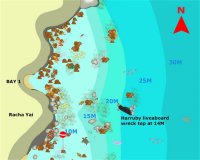
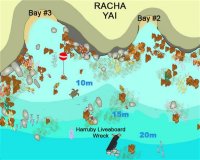
Bay 1 is located on the east side of Racha Yai Island. There are three wrecks to be explored at this dive site. Depths are between 5-25 meters and the white sandy beach is calm.
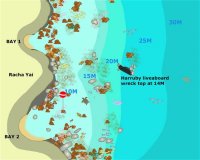
This dive site is located in the second bay on the east side of Ratcha Yai Island. It is a calm environment with white sand dotted with reef patches at a depth of 5m to 25m. There are a series of concrete artificial fish reefs facing offshore, where many fish can be seen roosting.
Homerun Reef is just north of Bay 1. A good alternative to the wrecks and concrete cubes around the main part of the bay. There is a small speedboat wreck at around 23m, just off the main reef. This is a good site for drift diving. It’s mostly large rocks, rubble and hard corals. Diving depth is 10-25 meters.
Siam Bay is a dive site located in a large bay on the western side of Ko Racha Yai Island. The shallow waters are sandy with coral and rocks scattered throughout. Near the center of the bay, at a depth of 25m to 20m, there are elephants, Thai palatial houses, and ethnic objects that are popular among divers.
Bungalow Bay is a calm dive site and very good for beginners, try scuba, and open water students. Depth ranges from 5-20 meters. There is no current or waves. An artificial reef is built here as well.
On the West side of Phi Phi Leh , north of Maya Bay, there is the bay of Malong, a frequented dive site between December and May, only dived occasionally during the Monsoon season.
Dock Mai Island is an island headed southeast from Phuket. You can dive on the east and west sides of the island. Depths are around 30 meters, and it is a wall dive all along the island. There are two large and one small cave on the east side at depths of 22M and 18M.
Banana Bay is located on the east side of Racha Noi island. It consists of a sandy bottom and with hard coral. Depth inside the bay is 5-20 meters. If you swim away from the beach you can find 50 meters of depth.
Marina Bay is a dive site located on the western side of the North Island of Racha Noi. As you enter from the bay and head south, you'll see a dynamic landscape of rumbling megaliths overlapping each other. This is a popular dive site with swim-throughs dotted among the boulders to stimulate divers' sense of adventure. It is not uncommon for manta rays to appear.
South Tip is a dive site located off the southern tip of the South Island of Racha Noi. There are huge roots with depths ranging from 9m to 40m. The current is strong at all times so this dive site is recommended for advanced divers only.
Bay 3 is the third dive site on the eastern side of Ratcha Yai Island. The central part of the bay is a calm white sandy area, dotted with branch coral beds and roots. From the northern end of the bay, you may drift dive along the island heading towards Bay 2. The reef is between 18 and 30 meters deep.
Super divesite with plenty of fish. This submerged pinnacle is completely covered in softcorals and anemones and home to a great variety of species.
Bon Island, about 50 km west of Khao Lak, is an uplifted limestone island about 20 km north of the Similan Islands. This is a long and narrow ridge point on the west side of the island.
Richelieu Rock is one of the most popular dive sites in Surin Islands National Park. It is a limestone reef that rises almost vertically from a depth of 35 meters, and appears only at low tide, about 1 meter above the surface.
From Phuket to reach Racha Noi takes about a 2 hour boat ride. On the east coast the first part of the island Racha Noi is a dive site named Manta Reef. It is more or less a wall dive with a depth up to around 22 meters. The wall is fully covered with different corals.
Camera Bay located west side of Racha Noi Island. Depht starts 5 meters and goes all the way to 60 meters. This is also good place for technical divers.
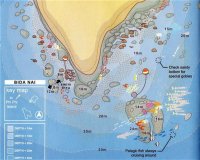
One of many dive sites at Phi Phi islands. Small rocky island south from Phi Phi Lee. Diving depht starts at 5 meters and goes to 30 meters plus. This site lies just to the north of Koh Bida Nok and is made of limestone cliffs hosting a large array of marine life.
Located in the middle of the sea between islands 7 and 8 in the Similan Islands, this reef dive site stands out in the middle of the sea. It was named after the shape of the rock sticking out of the water, which resembles the head of an elephant. The point is made up of huge layers of granite, dotted with numerous channels and swim-throughs that create a mystical landscape. The tide is good, and you can expect the feeding scene of the crabs, sharks and big fish in the early morning. In the shallow water, you can often find oversized trevally targeting small fish. This is one of the most dynamic dive sites in the Similan Islands.
This point is located northeast of the 9th island in the Similan Islands. It is named after the three large trees that are used to mark the entry, from a shallow depth of about 5 meters to a reef slope of about 18 meters, beyond which there is a pure white sandy area dotted with isolated roots. Offshore, there are beautiful rocky areas with schools of soft corals, where you can see large fish. Because the tide splits on the island, the tide is clear and you can enjoy drift dives when the tide is strong.
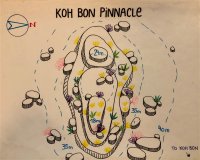
Not for beginners! Koh Bon Pinnacle starts at 22m and ends at 45m or deeper. Beautiful vegetation with lots of yellow soft corals are here. There are no descent ropes available. Doing a negative entry is an advantage!
Christmas Point is located on the western corner of Island 9 in the Similan Islands. It is named after the root of the thornbeam (English name: Christmas tree worm) that grows in clusters. Intricate rock formations eroded by tidal currents create channels and swim-throughs that provide dynamic terrain. Be careful out in the deep area along the rocks, as the tide is fast in some conditions.