Explore dive destinations around the world. Whether you are planning a relaxed dive holiday or an adventurous dive trip, here you find the perfect location shaped by the ocean.
Discover marine wildlife and iconic dive sites worldwide. Whether you are drawn to coral reefs, wrecks, or big marine life, explore where divers dive and what lives beneath the surface.
Connect with certified dive centers and professional instructors worldwide. Whether you’re a beginner or experienced diver, find the perfect location to learn, explore, and enhance your diving skills.
Experience the ultimate diving adventure aboard world-class liveaboards. Explore remote dive sites, enjoy multiple dives per day, and wake up in paradise at some of the planet’s most incredible underwater destinations.
Discover dive sites around the world where activity is at its peak right now. Whether you are searching for exceptional wildlife encounters or the right dive season, here you find where the action is happening beneath the surface.
For liveaboard trips, we partner with LiveAboard.com to offer the widest selection of dive safaris worldwide.
Liveaboard diving holidays pack more diving in the same trip and allow divers to explore far-flung dive areas and see more marine life in the most beautiful dive destinations of the world.
Whether its wildlife tours, cultural visits and scenic hikes you are after or idyllic shores, swim stops and wonderful meals on board, an adventure cruise offers an amazing experience you won’t easily forget.
When you think of Austria and Switzerland, diving is not the first thing that comes up in your mind. However, the mountainous countries offer surprisingly great diving opportunities. Thanks to the many alpine lakes and rivers, there are plenty of opportunities to enjoy the scenic and mystical underwater landscape. You will be surprised by the diversity of freshwater fish in Austria and Switzerland. Although the water can be very cold (dry suit is recommended!), the gin-clear water offers extremely good visibility.
Diving in Africa you can explore the wonders of the Red Sea or discover hidden gems like St. Helena Island.
Some of the world’s most paradisiac diving destinations in Asia can be found in Indonesia, Maldives, Malaysia, the Philippines, and Thailand.
Das Great Barrier Reef, das größte Korallenriff der Welt, ist der Inbegriff des Tauchens in Australien.
Diving in Occitanie – Discover the best scuba diving in France!
North America offers a wide variety of adventures for every type of diver such as ice diving in Alaska or cenote diving in Mexico.
Some of the top diving destinations in Oceania include Micronesia, Fiji, Polynesia, Palau, Guam or the Marshall Islands.
In South America, you will find plenty of dive sites to choose from, including Ilhabela, Abrolhos Archipelago, and Easter Island.
Explore scuba diving in the Atlantic Ocean – from temperate reefs to pelagic encounters. Discover top dive sites, conditions and marine life.
Discover scuba diving in the Baltic Sea, famous for historic wrecks and cold-water conditions. Learn where to dive and what to expect.
Experience world-class scuba diving in the Caribbean with vibrant reefs, walls and warm water. Explore the best dive destinations and conditions.
Explore scuba diving in the Indian Ocean, home to tropical reefs, sharks and clear waters. Discover top dive destinations and seasons.
Discover scuba diving in the Mediterranean Sea, from historic wrecks to caves and clear coastal waters. Find the best dive sites and seasons.
Explore scuba diving in the Pacific Ocean, known for vast reefs and big marine life. Discover top dive regions and underwater experiences.
Experience scuba diving in the Red Sea, famous for vibrant coral reefs and crystal-clear water. Discover the best dive sites and conditions.
There is so much saltwater to discover, everybody forgets about lakes, rivers caves. Landlocked, freshwater dives offer also surprising and exciting underwater experiences, plus there is no need to rinse your equipment afterwards. From fresh springs, to alp lakes, wild rivers and mysterious quarries, freshwater diving is very diverse and is suitable for beginners as well es pro divers. Some world famous dive spots include the Silfra Fissure in Iceland, the cenotes in Mexico or Grüner See in Austria. Start your freshwater adventure!
Based on dives logged by our community in the past 2 weeks
Japanese Gardens enjoys the protection of Koh Nanguan, which generally makes it a very calm and easy site. The depth ranges from just a couple meters to about 16 meters.
Great site for training dives as there is a big sandy area ranging from 1m to 16m deep. There are two different areas of huge artificial reef concrete cubes good for buoyancy or tech training. An abundant and dense hard coral reef area is on the east side and rocky sloping reef is on the west side.
One of the most famous dive sites on Koh Tao, this site features something for every experience level. Ranging from 5 to 19 meters, Twins is located just off the western side of picturesque Koh Nanguan and is a favorite of students and leisure divers alike.
Tanote Bay is a beautiful dive site on the east coast of Koh Tao. The reef starts right at the shore and reaches over the whole bay. The edge of the reef is at a depth between 8 and 15 meters. Besides the Katamaran Wreck at 18m, Tanote Bay has different artificial reef constructions as well as small caverns!
The main pinnacle of Chumphon Pinnacle comes as shallow as 14 meters and the deepest point of the site goes as deep as 45 meters. Offering great opportunities for divers at Open Water level through to XR level.
Located on South East of the island. This dive site has shallow water that is good for training dives and practice buoyancy. The dive site is sheltered, so you can dive in a calm and stable environment with no waves.
Hin Ngam is located on the southeast coast of Koh Tao, on the way into Aow Leuk which is a snorkeling and diving hotspot. The Him Ngam is sheltered and has a fringing reef running right around the bay. The dive site has a max depth of 12 meters with a sandy bottom making it ideal for beginner and student divers.
Located on the west-side of Nusa Penida Island, Crystal Bay has two coral reef formations separated by sand slopes. The combination of slopes and walls that form the topography at this dive site goes down to more than 50 meters and meets with large rock which is an ideal place for a cleaning station for sunfish.
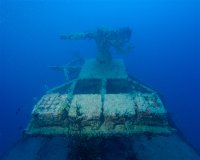
Just on the mouth of the bay, this newly sunk wreck is 44.9M long, 7M wide, is a high speed attack ship. Belonging to the Gulf Patrol Fleet, Royal Thai Navy and built by Singapore Ship Building and Engineering Co., Ltd.
White Rock, also known as White Rock and Black Rock, is located to the south of Nan Yuan Island, adjacent to Koh Tao. The whole site is a fairly large root, so no matter how many dives you do, you will never get bored of it, depending on the course you take, the depth and the type of life you observe. Beginners and seasoned divers alike should enjoy it.
Freshwater Amphibians: Expert Divers Beneath the Surface
The Architects of the Reef
Critters of the Sea
“Humans” of the Underwater World
Living Stars of the Sea
Dominators of the World’s Lakes and Rivers
Mesmerizing Movers
Diverse Ocean Dominators
Curious, Playful, and Cute
Gentle Movers of the Sea
Making the Oceans a Rainbow of Color
The Best Dads in the Sea
Kings of the Oceans
The Most Majestic and Ancient Ocean Swimmer
Record Holder of the Seas
Scuba Beach features a wide variety of coral with several sand flats that make it ideal for diver training. Entry can be by boat or via a stairway built into the artificial shoreline. Depths range from standing depth to 30m+.
Gab Gab 2 is just north of the dive site Gab Gab 1. There is a floating bouy that can be seen just 100 yards offshore. Start your dive here by descending on the mooring line, then swim north at 30 degrees. You will see lots of colorful coral, large jacks, nurse sharks, and tons of reef fish.
The WWI wreck, SMS Cormoran lies in 130 feet of water on her starboard side, adjacent to the Tokai Maru (which sunk in 1943). This is a very unique wreck diving site as it is the only dive site in the world where you can dive wrecks from both World Wars in a single dive.
Blue Hole is a very unusual dive on a natural limestone plateau. A vertical shaft begins at 60’ with a large “window“ opening at 125’. Drift dives are possible. You must be an experienced Deep diver to “shoot the hole“. Great vis and the 30 to 60’ plateau make this a popular site for all divers.
The Tokai Maru was sunk via torpedo by the U.S. submarine, Snapper on August 27th, 1943 and is now resting at the bottom of Apra Harbor in 130’ of water. Sitting alongside the Coromoran (scuttled at the beginning of WWI), this is a unique wreck site.
Once the fastest westbound transatlantic voyager, the RMS Scotia was a British passenger liner. Operated by the Cunard Line, it was an ocean-going paddle steamer that was converted into a twin-screw cable layer in 1879.
The American Tanker is a large concrete barge that was used during World War II to transport fuel from the United States to Guam. It was one of five barges that were brought to Guam and the remains of the others can be seen along the breakwater. This is a great boat dive for all diver levels.
This dive site is very popular for our local and visiting divers. Located along the Orote peninsula, an occasional barracuda is seen here, but not as frequent as in the past. Depths range from the very shallow to an average depth of 45’ to over 100’, with an average of about 45’.
This dive is in Apra Harbor. Depth is 10 - 90 feet and is only reachable from a boat. It features a sloping reef with a large variety of corals and thousands of fish. This is a great site for divers of all levels.
Apra Beach (aka Outhouse Beach) is a popular training site for beginner dive classes. A wide variety of fish frequent this location. It is also a great night dive for divers of all levels.
Located off Gab Gab Beach, this shore dive can only be accessed via the Navy Base in Guam. This popular training site is easy for divers of all levels. A variety of coral and tons of fish live here. The outer reef is accessible by boat for divers without military access privileges.
Large “canyon“ starting at 60’, visibility 100’+, with Sea Fans along the walls. Schools of barracuda and some sharks are occasionally seen. Accessible by boat only with a possibility of currents. This shallow plateau is suitable for all divers, and extended range divers will love the deep wall.
Apra Harbor, 35-140’ A Plateau along the breakwater with many bulldozers and other construction equipment left by the Seabees when they finished building the breakwater. A small harbor transfer ship and a large bulldozer rest at the bottom of the slope 130.
Dive near the mouth of the harbor at this beautiful reef. This site slopes from a shallow reef flat, down to 130+ feet deep. It is accessible by boat only. This site is very easy and has great visibility for all divers.
Located near the entrance of Apra Harbor, this is a beautiful reef not normally visited by divers and is only accessible by boat. A great variety of pristine corals with a gradually sloping wall to 120 feet/36m. Visibility is usually 40-90 feet/12-27m.
Usually done as a drift dive, starting at The Scotia, or First Beach, then due west out of the harbor. Only accessible by boat, and divers must be very aware of boats transiting overhead. Clear water and a wide variety of fish are found here.
The Kits is a Japanese freighter sunk in July 1944. It is sitting upright on the bottom of Apra Harbor at 140 feet deep. The large bow gun is still intact. The deck of the vessel is 115 ft deep, with the masts reaching to about 50 ft from the surface.
Drift along the Glass Breakwater from Val Bomber to American Tanker. The barges were dropped here when the breakwater was created in the mid-1940’s. Colorful soft and hard corals along the wreckage and a variety of reef fish. Elephant Ear Sponges are abundant
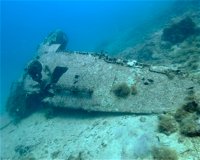
Apra Harbor, 25-100’. The Japanese Val bomber sits in 85’ laying against side of the sloping reef. There are also numerous barges in shallow water that can be explored on the same dive. Sunk during the liberation of Guam, July 1944
Pristine coral can be found on this sea mount that is due west from San Luis beach. This is one of several seamounts that were unaffected by dredging in the ’60’s.Several great anemone beds and numerous reef fish can be seen.Accessible by boat only
Harley reef Is a nice and easy dive site for all divers to enjoy! The Harley itself sits in roughly 15 feet of water along the breakwater wall in Apra Harbor. Starting at 15’ with a nice sloping reef down to 110’, it is a great dive site for all levels. Check out the Val Bomber and Barge Reef – both nearby.
An extremely clear water drop-off outside the Glass Breakwater. Upper reef flats start at 30’ with severe drop-off. Accessible by boat only, always a possibility of strong currents.Photographers love this site for wide-angle and macro pics.
North end of Luminao Reef. Popular reef dive by boat as it is common to see big pelagic fish and occasional sharks. Best done as a drift dive and always from a boat.
This site is home to the Fish Eye U/W Observatory, this popular beach site is home to an abundance of juvenile reef fish as well as several anemone beds and numerous hard and soft corals. Great for snorkelers and divers of all levels.