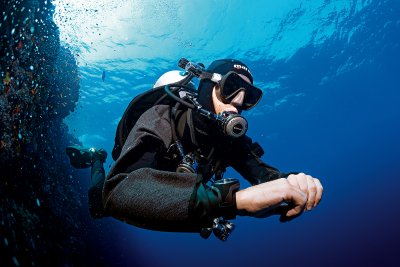
Explore Wolf Island
Wolf Island, in the Ecuadorian Galapagos is an aspirational trip for most scuba divers. Lying 350km away from San Cristobal, this tiny (1.5km square) speck of volcanic rock represents some of the best diving in the world.
Tourism on the island is forbidden, so the only visitors are scuba diving liveaboards. Its only close neighbour is Darwin Island so little traffic unrelated to scuba diving passes this way. Diving on Wolf Island can be complex - fierce currents, powerful surge and choppy surface conditions all combine to create conditions best suited to experienced divers.
Whilst the highlights of diving on Wolf Island are numerous, the most iconic image has to be the “wall” of hammerhead sharks, silhouetted against the sunlit water and gently undulating into the current.
The best Months to Dive in Wolf Island
Wolf Island diving is possible year round. From January to June is the warm and wet season. It brings slightly increased rainfall, as well as warmer (25°C) and calmer ocean conditions. This is the best season to see manta rays and bigger schools of hammerheads - though these are commonly seen year round.
From June to December, the Humboldt Current brings cool, nutritious water from the north. The increased plankton in the water brings in the seasonal visitors - whale sharks. These enormous fish are seen regularly throughout this season.
Top Wolf Island Dive Sites
1. El Derrumbe
This site is renowned for its diverse marine life including schooling hammerheads, manta rays, turtles, and Galapagos sharks. Occasional sightings of whale sharks and massive fish schools add to the spectacle. It is considered an advanced scuba diving site, featuring gentle slopes starting at 10 meters. The aquatic environment is part of a protected marine park, offering a unique underwater experience.
2. Shark Bay
True to its name, Shark Bay is dominated by a variety of sharks, including large schools of hammerheads at around 25 meters, as well as Galapagos and silky sharks. Sea lions are a common sight here. This advanced scuba diving site is known for its vibrant shark population and dynamic underwater environment, ideal for seasoned divers.
3. The Caves
Featuring stunning caves, caverns, and swim-throughs created by erosion, The Caves offer an exciting exploration for scuba divers. Once out of the caves, divers can enjoy a gentle drift while observing the breathtaking topography and abundant aquatic life. This site is suitable for advanced divers due to its complex underwater structures.
4. Fondeadero
Fondeadero is a popular night dive location, protected from strong currents, making it suitable for both beginner and advanced scuba divers. The site offers a magical experience with bioluminescence and sightings of deep-sea creatures and fur seals hunting by night. This dive site provides a unique opportunity to explore the underwater world after dark.
5. North Islet
Also known as La Banana due to its curved shape, North Islet features a wall dotted with caverns, tunnels, and captivating topography. The moderate to strong currents make it ideal for advanced scuba divers. Divers can expect to encounter hammerheads, turtles, and manta rays, adding to the excitement of exploring this dynamic site.