Explore the Russell Islands
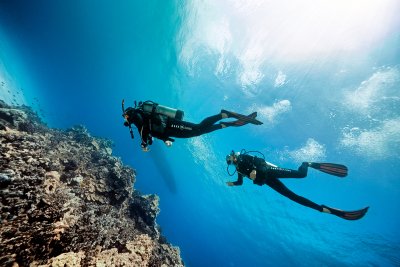
The Russell Islands are two small islands (Pavuvu and Mbanika), as well as several islets in the Central Province of Solomon Islands. The underwater topography is varied; from shallow bays, to steep walls and drop-offs, caves, and rambling coral reefs. This means that while you are scuba diving in the Russell Islands, you will find yourself constantly anticipating the next surprise, whether a shark cruising into view or macro critters taking refuge in the vibrant reefs.
If you are visiting the Solomon Islands to explore the wealth of wrecks littered on the seafloor, the Russell Islands have their fair share. During World War II, there were two airfields located on the Russell Islands, which after being abandoned, led to the formation of artificial reefs consisting of dumping trucks, jeeps, tractors, bulldozers and a large amount of amunition. There are no dive resorts or dive centres on the islands, so the only way to scuba dive the Russell Islands is via liveaboards that visit the Solomon Islands best dive sites.
The best Months to Dive in the Russell Islands
The Russell Islands in the Solomon Islands offer excellent year-round diving conditions, with tropical waters that maintain temperatures between 27°C–30°C/81°F–86°F. This makes diving possible throughout the year, with consistently warm and inviting conditions. Visibility typically ranges from 20 meters/66 feet to 30 meters/98 feet, providing clear views of the vibrant marine life and stunning coral formations.
Weather factors such as wind and currents are generally mild, although the period from November to April can bring stronger winds and occasional rain due to the wet season. During this time, the seas may become choppier, slightly reducing visibility and increasing currents. Nevertheless, the sheltered dive sites around the islands often remain accessible, making the Russell Islands a reliable destination for diving enthusiasts.
Top Russell Islands Dive Sites
1. White Beach
White Beach is an exceptional dive site with remnants from WWII, including trucks and bullets, providing a unique underwater landscape. The area is known for its macro life, featuring pygmy seahorses, ornate ghost pipefish, and mandarinfish, especially at dusk. This site is suitable for scuba diving and is considered accessible to divers of all levels.
2. Mirror Pond
Situated on Mane Island, Mirror Pond offers shallow caverns and coral gardens. The site is ideal for both scuba and freediving, known for its mirror-like reflection in calm waters. The dive concludes with a pinnacle encased in anthias. It is an easy to moderate dive, perfect for observing coral and fish diversity.
3. The Bat Cave
Close to Mirror Pond, The Bat Cave features a large cavern where divers can surface to observe fruit bats. Outside, look for pelagics and pygmy seahorses. Suitable for scuba diving, it offers a moderate adventure level. The site has unique geological formations, making it a captivating dive experience.
4. Leru Cut
Leru Cut is a renowned dive site featuring a narrow, long underwater passage flanked by sheer walls. Divers can explore vibrant coral formations and schools of fish. Accessible for advanced divers, this site is best explored through scuba diving due to its depth and complexity.
5. Mirror Pond - Freediving
This site offers an exceptional freediving experience with its shallow coves and reflective waters. The interconnected canyons and coral gardens make it a captivating spot for observing marine life in a serene setting. The adventure level is easy to moderate, making it suitable for various skill levels.