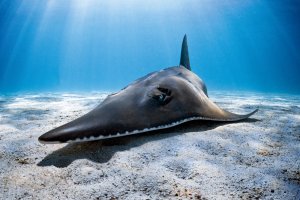
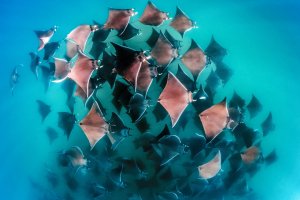
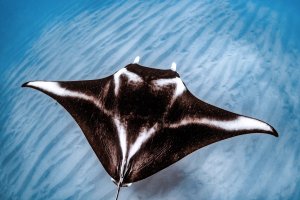
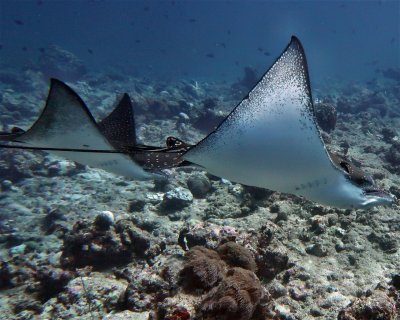
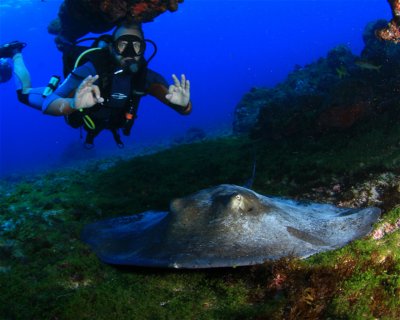
Rays are easily considered one of the most gracefully moving creatures in the sea. With their flat, disk-like bodies, it is hard to distinguish a ray’s body from its fins. Seeing a ray swim with its wing-like pectoral fins is reminiscent of watching a bird fly in the sky. Witnessing these magnificent animals “fly by” underwater is always a highlight for every diver. With over 500 species to choose from, you can dive with rays all over the world from giant manta rays in Indonesia, to peaceful spotted eagle rays in Tahiti, and huge southern stingrays on Grand Cayman Island, just to name a few! Read the map to find out where you can scuba dive with the most popular types of rays.
Animals in this Category
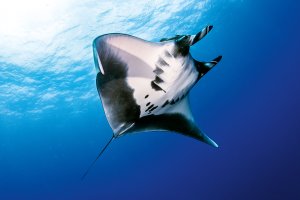

The image shown is a representative illustration and does not depict every individual animal in this category.
Total number of species approx.: 11
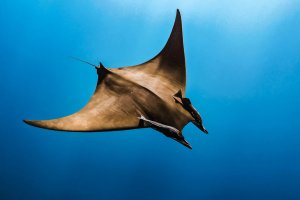
The image shown is a representative illustration and does not depict every individual animal in this category.
Total number of species approx.: 25
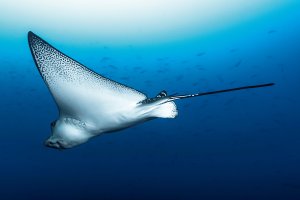
The image shown is a representative illustration and does not depict every individual animal in this category.
Total number of species approx.: 80
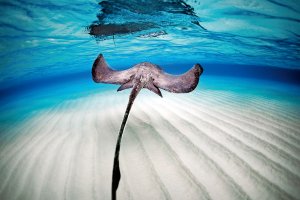
The image shown is a representative illustration and does not depict every individual animal in this category.
Total number of species approx.: 60
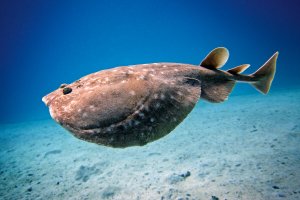
The image shown is a representative illustration and does not depict every individual animal in this category.
Total number of species approx.: 250
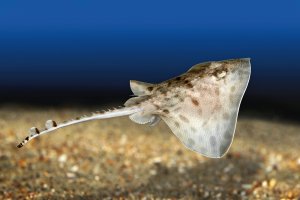
The image shown is a representative illustration and does not depict every individual animal in this category.
Total number of species approx.: 20