The puffer fish is named after its ability to inflate itself like a ball in danger or stress. They pump water into a sac-like enlargement of their stomach, causing them to deform into a ball. This change in volume makes it almost impossible for predatory fish to swallow the puffer fish and it can even suffocate them. If this stress reaction is caused willfully by divers, puffer fish can sometimes inadvertently suck in breathing gas from divers, which leads to them being buoyant and floating helplessly on the surface. This usually ends fatally for the animal. They are rarely eaten by predatory fish, but dolphins have been observed to get intoxicated on these animals by chewing lightly on them, which causes the puffer fish to release small doses of the strong neurotoxin tetrodotoxin. This poison is fatal to humans and no antidote is known; ironically, however, in Japan puffer fish is considered a delicacy called fugu. However, people’s curiosity about this questionable delicacy leads to accidents every year.
There are more than 120 species of puffer fish worldwide. Most can be found in tropical and subtropical regions. However, species have already penetrated the Mediterranean through the Suez Canal. They are shy animals that swim slowly but are incredibly agile. As a rule, they avoid divers and snorkelers, but can be easily observed, for example, at cleaning stations or during twilight / night dives. Diving with the cute looking fish is very enjoyable but is unlikely to be seen in their “inflated“ state. They are not dangerous to the diver unless they are touched. The fish are excellent at defending themselves with their sharp teeth. Click here to find the best areas around the world to dive with these cute but defensive fish.
Drift dive with the current flowing from the western tip of Kinohlas along the north side towards the small Thila. Lots of fish on the top of the reef, some really nice little overhangs deeper. Experienced divers dive to the thila, beginners stay over the overhangs and slowly ascend the Sandy Slope
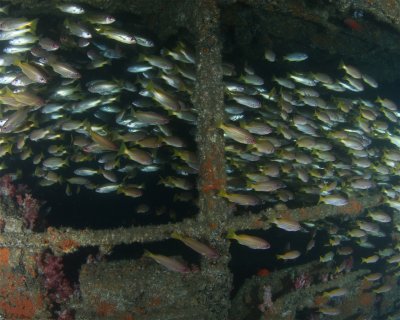
Gentle slope reef with a lot of yellow tail Snappers, resident Green Turtles and Hawksbill turtles. Reef has strong current but a diver can hide behind huge coral bommies and hang out with fish at 5m
That an depth of 11 meters there is a boat shaft covering an area of one acre. The shipwreck hosts tropical marine life such as lionfishis diving point is 13 miles from the base of Mare Sud and is accessible by boat and by car. It is a sandy beach with a maximum depth of 12 meters. At 150 meters off the coast and
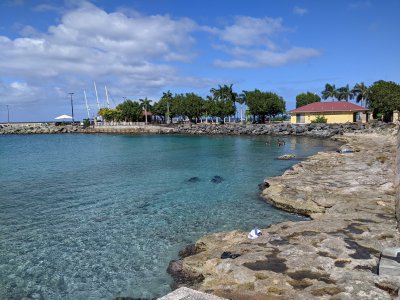
A beautiful house reef sitting just off-shore from the Magic Life resort. Easily accessible from the beach or the jetty with calm conditions and very clear water.
This is a typical channel dive, however, the down/up currents found here make for difficult conditions that are not suitable for the beginner diver.
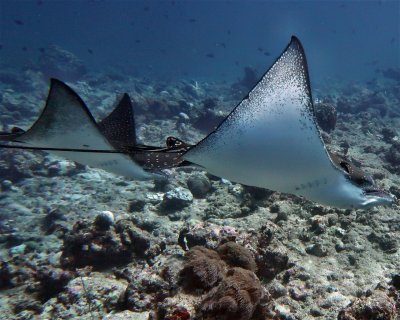
Bat Islands are considered one of the best bull shark dive sites (Apr - Nov). But only advanced certified divers are allowed due to the depths. “The Big Scare“ is most famous for the chances of seeing the Bull sharks, although during the dive we can also encounter different types of rays including oceanic mantas.