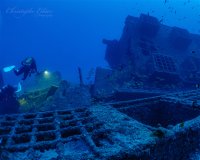
On 16 November 1981, with a crew of 26 on board and loaded with timber, the Sea Venture was waiting in the Bay of Saint Paul for a berth to become available in the Port of La Pointe des Galets. Already damaged by bad weather and destabilised by its cargo, the ship ended up taking on water and sinking opposite the
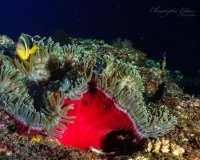
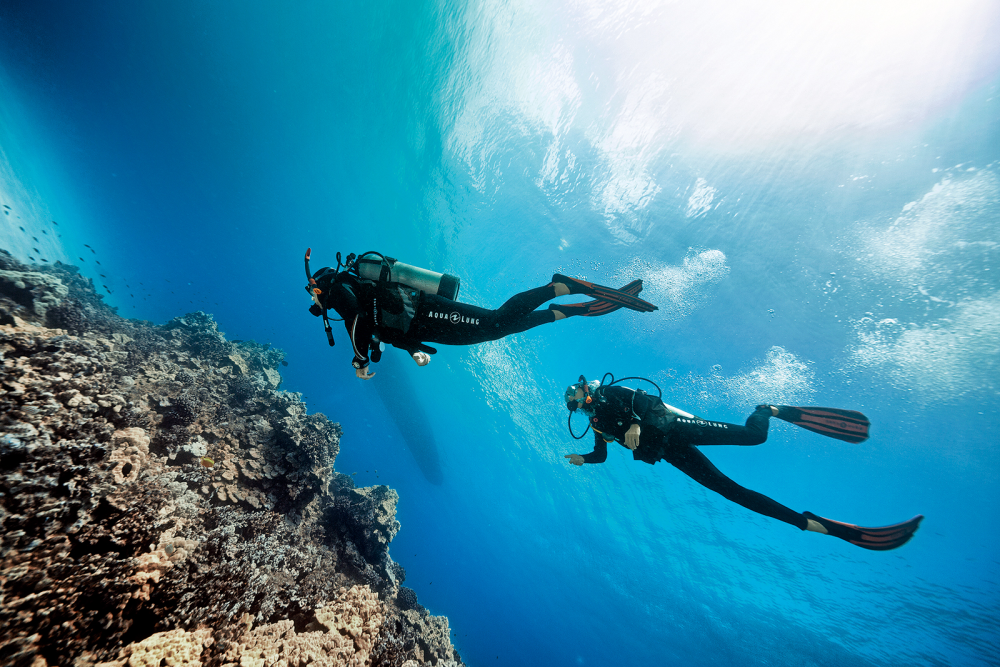
A must-see site. This dive site is suitable for all levels. It is made up of ancient lava flows, colonized by coral. It’s a photographer’s delight, with both macro and wide-angle shots.
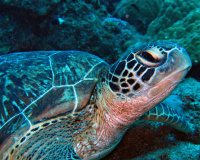
Formed by a gully that “hollowed out“ the coral reef, the pass is a place of exchange, rich in plankton and nutrients. Although visibility is sometimes uncertain, apart from the scenery, the food chain is in full swing, making this an unmissable dive! Particularly for these turtles and rays
Giving its name to a rectangular rock that has fallen from the cliffs and stands proudly on the beach, this site offers a reef tour on and in a platier cut by faults, canyons, arches and small caves, extended by white sand and numerous rocks of various shapes and sizes.
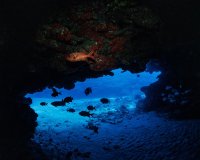
Fifteen metres below the surface, a natural chimney of basalt rock filled with lobsters and other soldier fish leads you eight metres down under an arch from where you can explore a small network of faults on one side or emerge from the gloom to wander between white sand and rock tongue on the other.
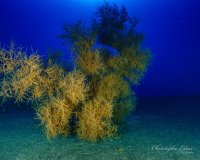
On this dive site, an enormous tree of black coral, similar to a fir tree, is planted at a depth of 56 meters in the black sand. The site is vast, consisting mainly of three large rock formations, some of which are fissured, providing shelter for marine life.
The “Petites Gorgones“ is one of the few sites on Réunion Island where you can see gorgonians at a depth of 20 metres. The site is a veritable labyrinth of rocks and coral reefs set against a backdrop of white sand. The site is ideal for underwater training and exploration.
The Navarra is a 47 meters long fishing vessel that was deliberately sunk by the French Federation of Diving (FFESSM) of La Réunion in 1996. She lies at a depth of 53 meters and was broken into two pieces by the swell. The top of the wreck is at 45 meters. The wreck is sometimes subject to strong currents.
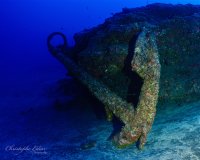
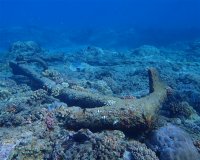
Les Roches Merveilleuses is a deep dive site located between 47 and 53 meters. This vast site, whose name reflects the diversity of its flora and fauna, is adorned with large gorgonians. In the second part of the site, you can find an enormous anchor, 6 meters long, lying on its side.
Sankuba is a deep site, located at a depth of 60 meters off Saint-Paul Bay, offering intense deep-sea sensations. It is ideal for Extended Range technical training and advanced dives.
A direct descent into the blue towards a grey sandy bottom. You’ll see a beautiful 48m-deep rift, large gorgonians sheltering a colony of groupers, and schools of pufferfish. A deep dive that can be made difficult by the current.
This site, as its name suggests, offers a route over historic relics, such as three cannons and four anchors, resting on a reef between 4 and 6 metres deep. This site is ideal for beginners, snorkellers and first-time divers.
The tower sits on a white sandy bottom at 22m, its walls providing refuge and shelter for a large population of fish and crustaceans. Life is richest at the top of the tower. Flying over the site is a thing of beauty.
Set against a backdrop of pristine white sand, overhung by a coral drop-off, this site abounds in faults and caves with a fascinating play of light.
This is a fascinating site at a depth of 38 meters, offering an exceptional diversity of marine fauna. It is particularly appreciated for its biodiversity and interesting underwater conditions.