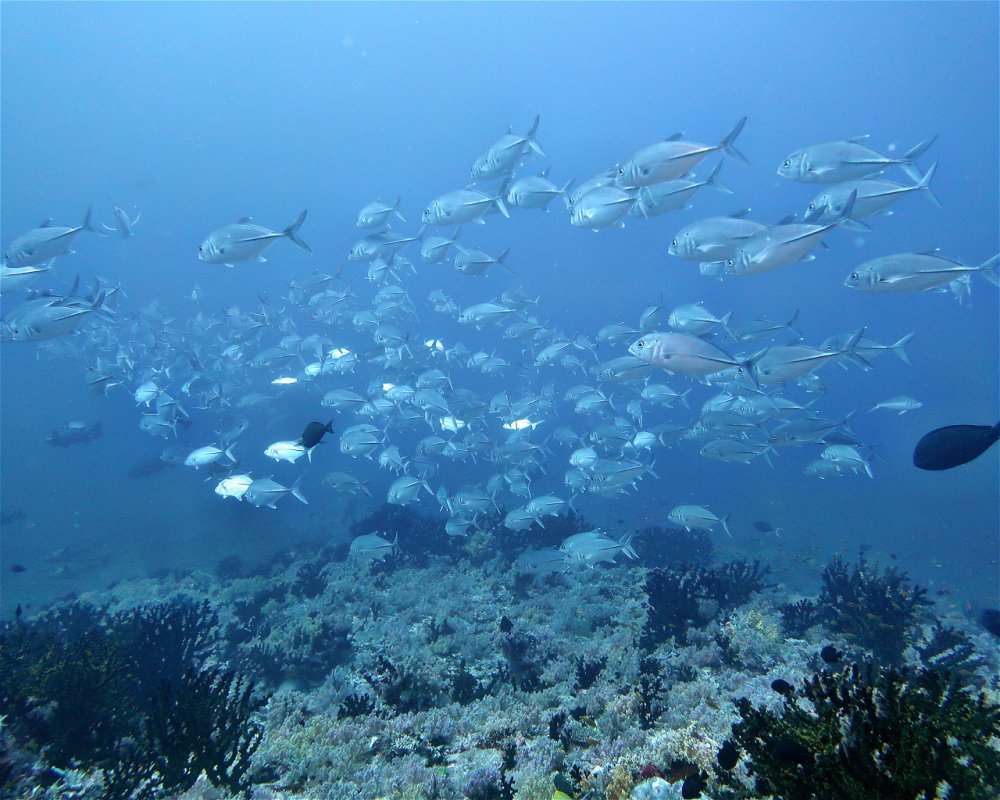
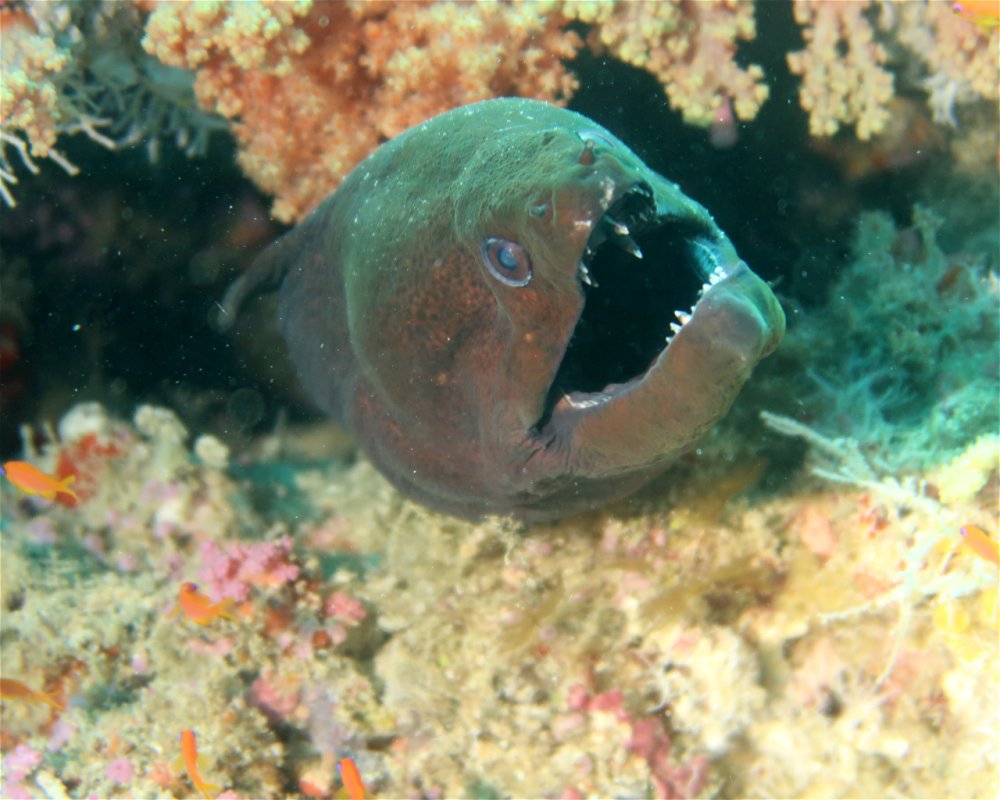
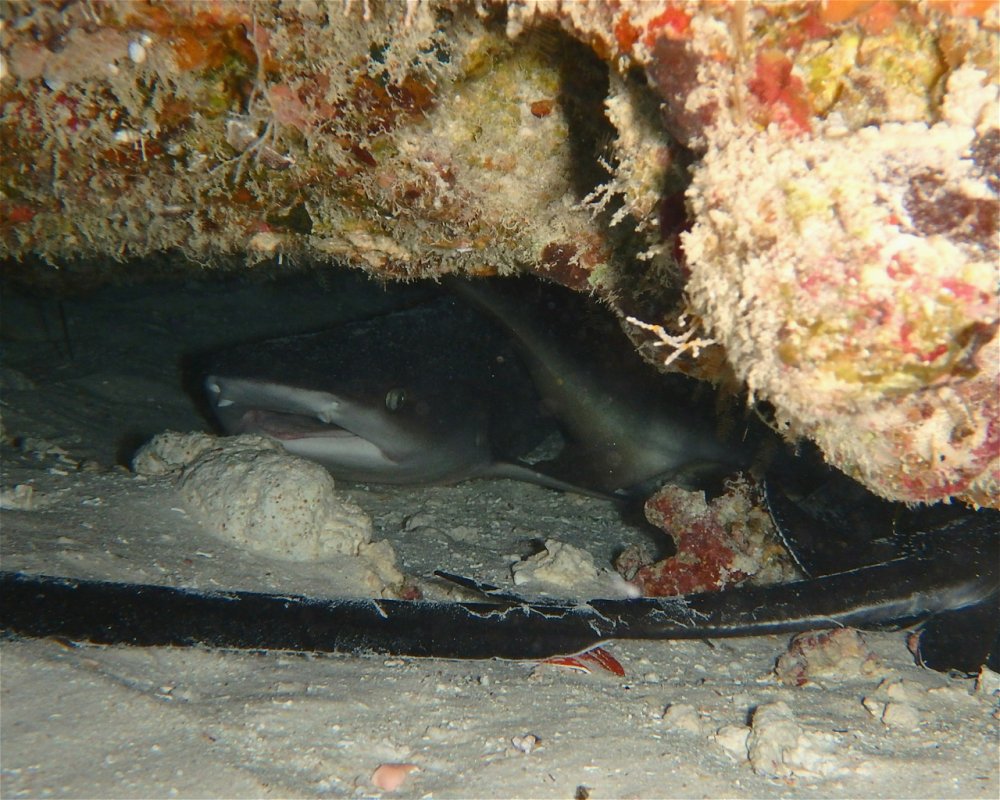
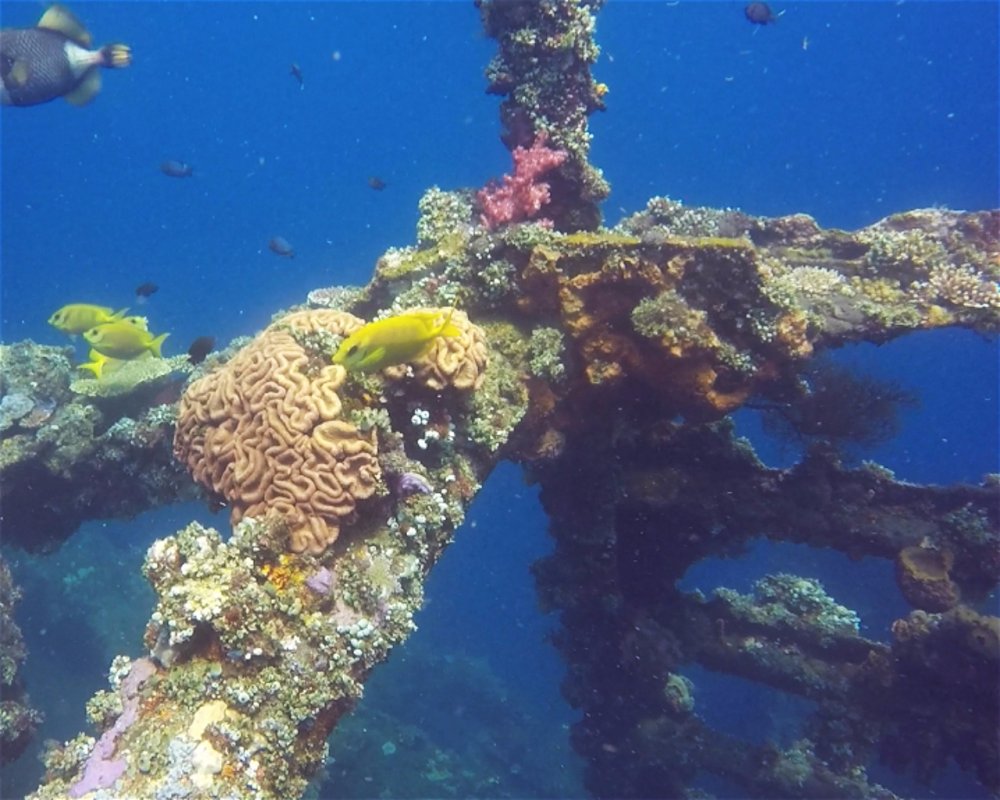
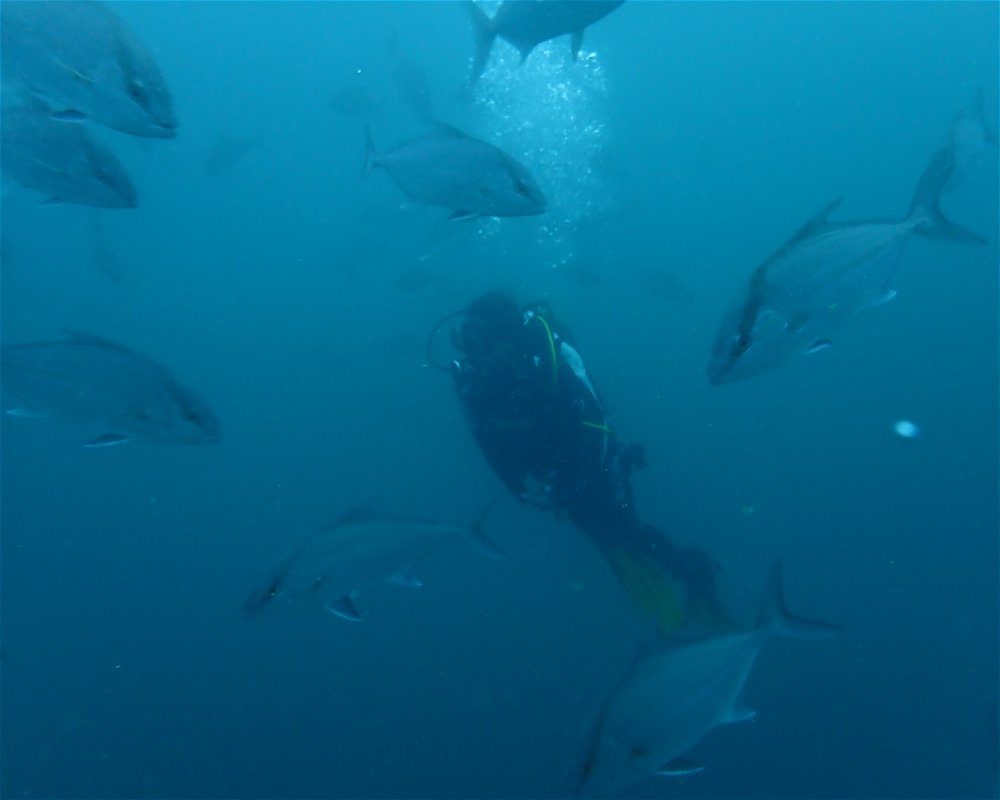
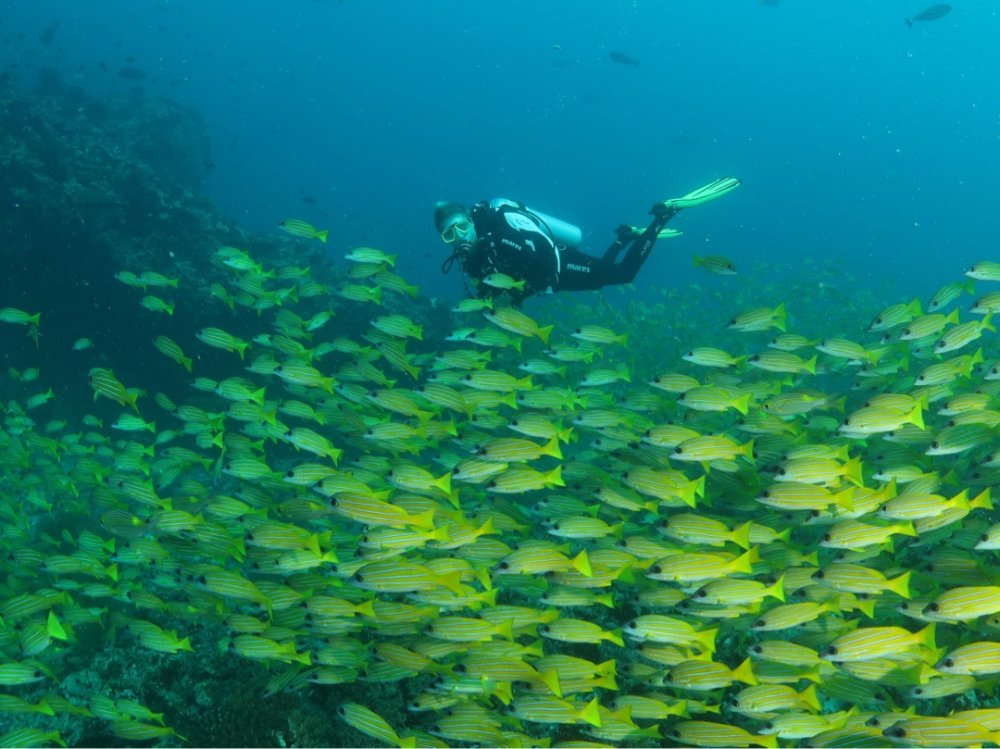
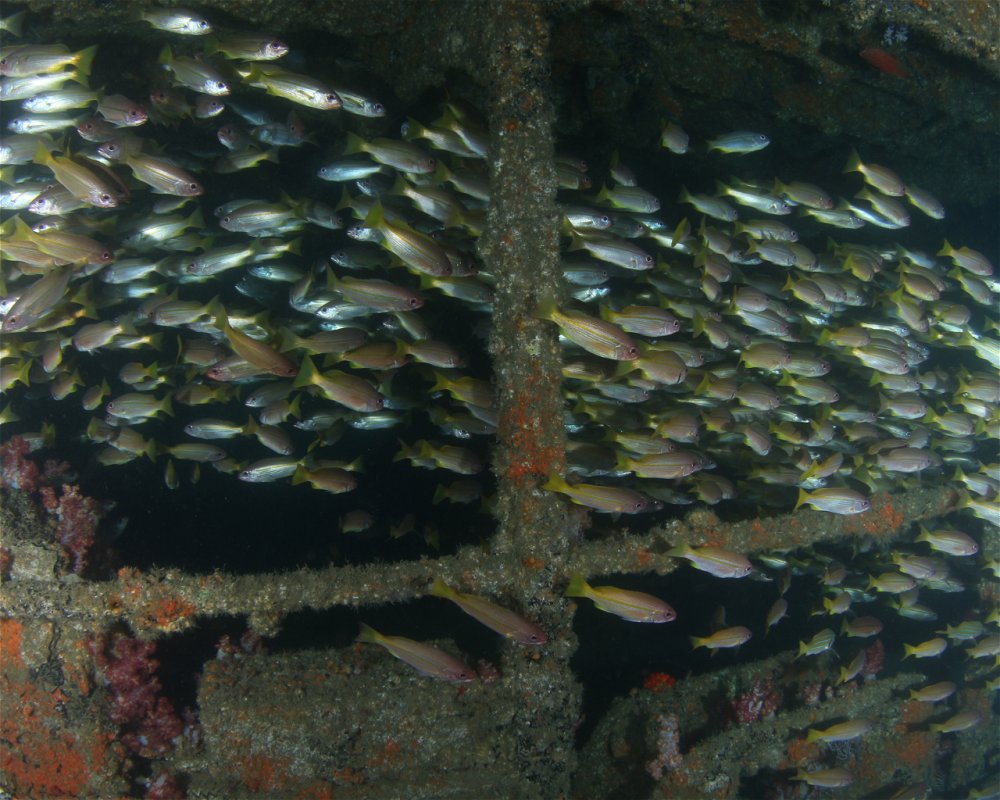
Snappers are a popular food fish commonly seen trolling coral reefs and a favorite sighting amongst scuba divers. These colorful, large marine fish include around 113 species within the Lutjanidae family. On menus throughout tropical destinations like the Caribbean, you can find the most popular snapper, the red snapper. The largest snapper, the cubera snapper, grows up to 1.52 m (5 ft) in length.
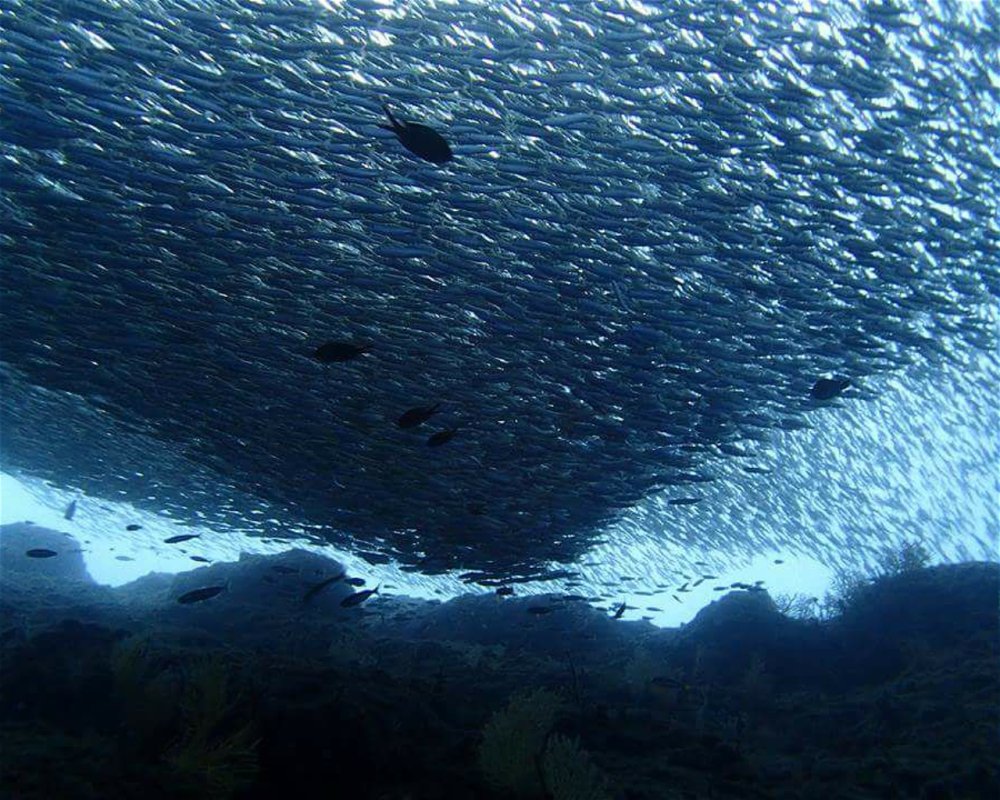
You can go diving with snappers all over the world in the ocean’s tropical and subtropical regions. These carnivores are usually found in abundance, staying in medium to large-sized schools near coral reefs. They are easily recognizable by their elongated bodies, large mouths, and forked tails growing to an average size of 60-90 cm (2-3 ft). Explore the map below to see where you can go diving with snappers.
If you want to see anemones you have to come to this place,, there is a field with hundreds of anemones where we also can always find turtles. The Giri has approx. a diameter of 120m and is easy to dive around. Some nice small overhangs
This dive site is located right next to the island. The long reef ends into a corner of the canal. Here you can see several highlights. A very nice dive site for beginners as well as experienced divers.
The reef top has something of a lunar landscape, despite or precisely because of this it is often a very special dive. The northern side often serves as a starting point when the current is draining from a steep wall over a sandy plateau to a normal slope. Manta rays between the end of September and November
Himmafushi Corner is a drift dive, best suited for divers with a lot of experience as this dive is deep and can have strong currents. The corner slopes from 5 to 30m and after that comes to a small drop off to 45/50m. This dive should only be conducted during the incoming current.
A very nice drift dive over several hundred meters along the island of Kottefaru. The top reef is made of hard corals that drop from 4 to 8m, sloping down to 15m, then a wall that drops far more than 30m. On the top reef between June and November the site becomes a cleaning station for mantas.
Probably one of the best Thilas in the whole North Male area. There are several pinnacles on the north of the Thila, where the main fish are, along with beautiful coral formations and sea fans. Wonderful dive for experienced divers due to the strong current.