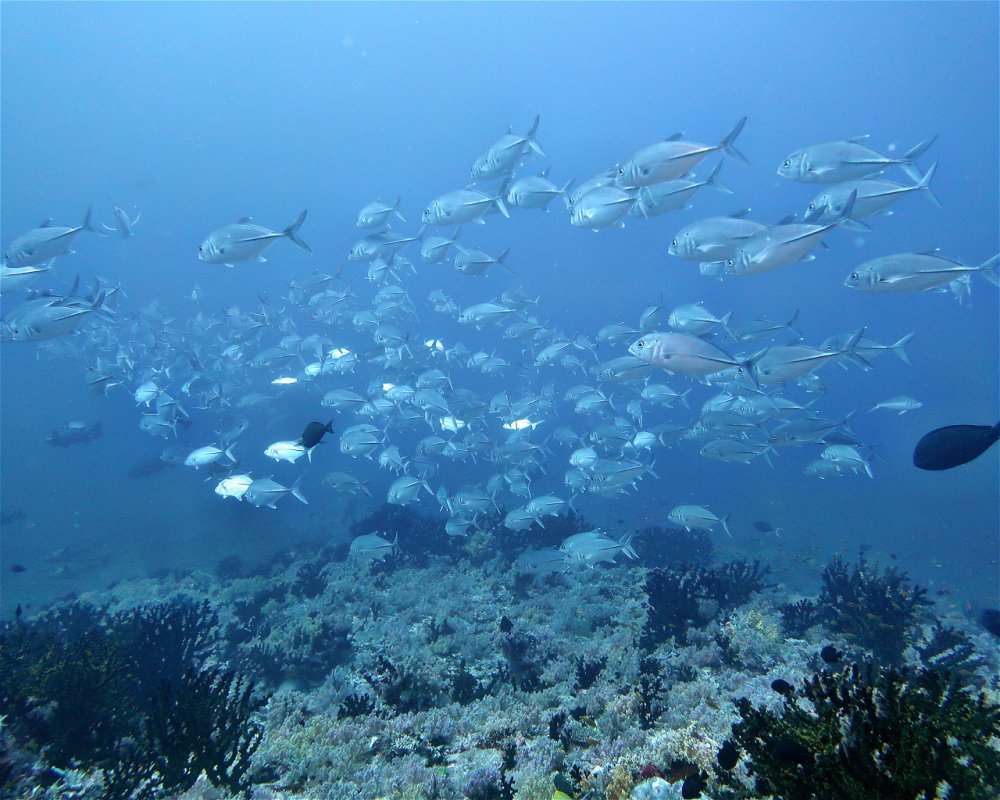
Damselfish are a common sighting amongst coral reefs throughout the tropical regions of the Atlantic and Indo-Pacific oceans. There are around 250 different species of these small fish, all within the Pomacentridae family. Damselfish are easily recognized by their rounded bodies, elongated dorsal fin, and small, forked caudal fin. Juveniles are especially enjoyable to see as they are typically covered in vibrant spots.
Highly territorial, you will typically see damselfish aggressively guarding their small area of the reef from other fish and even divers who approach too closely. But don’t fear, at an average size of only 15 cm (6 in), they cannot cause much harm. In fact, diving with damselfish can become nearly comedic as they attempt to fight you off if you hover near their territory too long. Explore the map below to find where you can go diving with damselfish.
Drift dive along Kudathulhaadhoo Island. Large overhang with soft corals in the west, caves in the middle, and a small bay and the tip in the east is full of fish
Drift dive with the current flowing from the western tip of Kinohlas along the north side towards the small Thila. Lots of fish on the top of the reef, some really nice little overhangs deeper. Experienced divers dive to the thila, beginners stay over the overhangs and slowly ascend the Sandy Slope
Northern Arch is a renowned site that often has large pelagic species and current. The Arch is deep and bottoms out at over 36m, there is interesting structure on either side of the Arch and the Northern side of the Arch keeps sloping away down to 50m+.
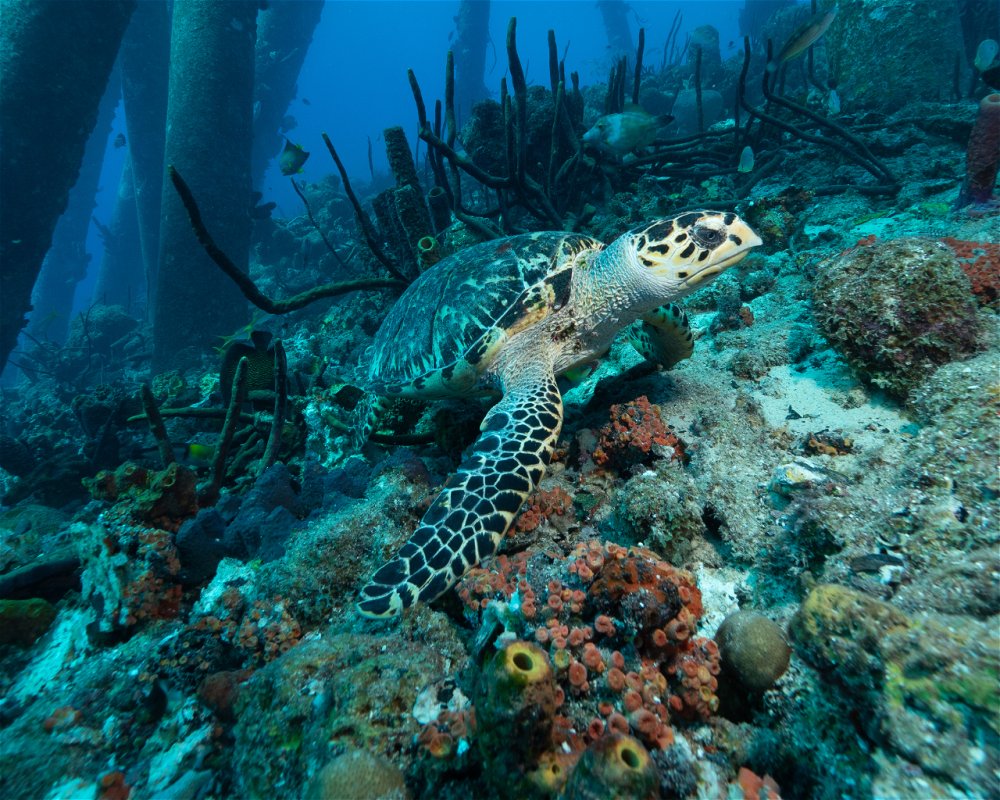
Gentle slope reef with a lot of yellow tail Snappers, resident Green Turtles and Hawksbill turtles. Reef has strong current but a diver can hide behind huge coral bommies and hang out with fish at 5m
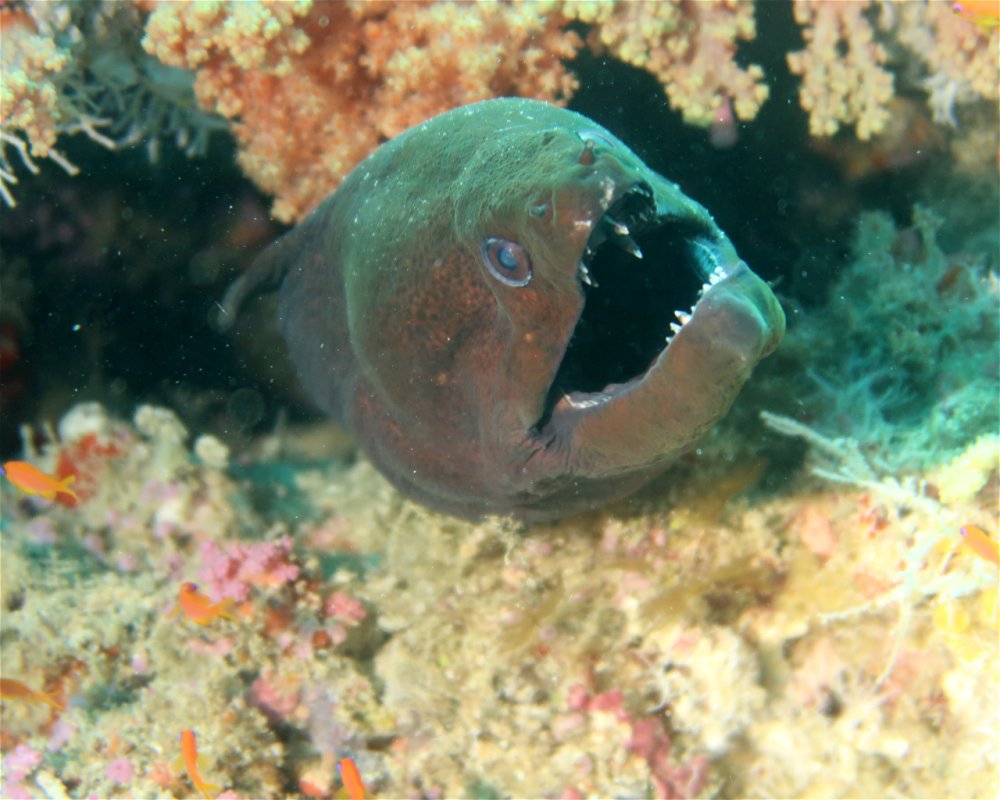
A small reef with many different types of colorful coral. The reef roof is at a height of 6m and has a diameter of approx. 20m, at a depth of 25m it should be approx. 50m. On the west side an overhang with soft corals, further deeper a gap with giant moray eels and cleaner shrimp.
A very colourful wall dive. A short distance from Blue Mao Mao Arch on the opposite side of the Labrid Channel and in good conditions with no current, both sites could be seen on the same dive for divers good on their gas consumption and navigation. The walls maximum depth is around 20m.