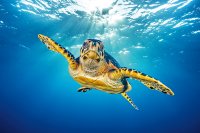
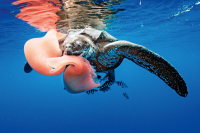
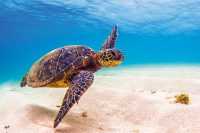
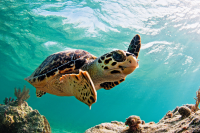
Connect with certified dive centers and professional instructors worldwide. Whether you’re a beginner or experienced diver, find the perfect location to learn, explore, and enhance your diving skills.
Explore dive destinations around the world. Whether you are planning a relaxed dive holiday or an adventurous dive trip, here you find the perfect location shaped by the ocean.
Discover marine wildlife and iconic dive sites worldwide. Whether you are drawn to coral reefs, wrecks, or big marine life, explore where divers dive and what lives beneath the surface.
Experience the ultimate diving adventure aboard world-class liveaboards. Explore remote dive sites, enjoy multiple dives per day, and wake up in paradise at some of the planet’s most incredible underwater destinations.
Discover dive sites around the world where activity is at its peak right now. Whether you are searching for exceptional wildlife encounters or the right dive season, here you find where the action is happening beneath the surface.
For liveaboard trips, we partner with LiveAboard.com to offer the widest selection of dive safaris worldwide.
Liveaboard diving holidays pack more diving in the same trip and allow divers to explore far-flung dive areas and see more marine life in the most beautiful dive destinations of the world.
Whether its wildlife tours, cultural visits and scenic hikes you are after or idyllic shores, swim stops and wonderful meals on board, an adventure cruise offers an amazing experience you won’t easily forget.
Diving in Africa you can explore the wonders of the Red Sea or discover hidden gems like St. Helena Island.
Some of the world’s most paradisiac diving destinations in Asia can be found in Indonesia, Maldives, Malaysia, the Philippines, and Thailand.
Das Great Barrier Reef, das größte Korallenriff der Welt, ist der Inbegriff des Tauchens in Australien.
Diving in Occitanie – Discover the best scuba diving in France!
North America offers a wide variety of adventures for every type of diver such as ice diving in Alaska or cenote diving in Mexico.
Some of the top diving destinations in Oceania include Micronesia, Fiji, Polynesia, Palau, Guam or the Marshall Islands.
In South America, you will find plenty of dive sites to choose from, including Ilhabela, Abrolhos Archipelago, and Easter Island.
Explore scuba diving in the Atlantic Ocean – from temperate reefs to pelagic encounters. Discover top dive sites, conditions and marine life.
Experience world-class scuba diving in the Caribbean with vibrant reefs, walls and warm water. Explore the best dive destinations and conditions.
Explore scuba diving in the Indian Ocean, home to tropical reefs, sharks and clear waters. Discover top dive destinations and seasons.
Discover scuba diving in the Mediterranean Sea, from historic wrecks to caves and clear coastal waters. Find the best dive sites and seasons.
Explore scuba diving in the Pacific Ocean, known for vast reefs and big marine life. Discover top dive regions and underwater experiences.
Experience scuba diving in the Red Sea, famous for vibrant coral reefs and crystal-clear water. Discover the best dive sites and conditions.
Discover scuba diving in the Baltic Sea, famous for historic wrecks and cold-water conditions. Learn where to dive and what to expect.
Kings of the Oceans
The Best Dads in the Sea
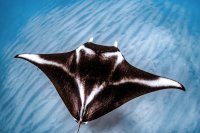
Gentle Movers of the Sea
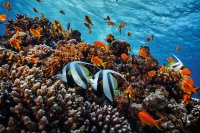
Making the Oceans a Rainbow of Color
Dominators of the World’s Lakes and Rivers
The Most Majestic and Ancient Ocean Swimmer
Diverse Ocean Dominators
Critters of the Sea
Mesmerizing Movers
Record Holder of the Seas
“Humans” of the Underwater World
Curious, Playful, and Cute
Courses & Events
Dive Sites & Wildlife
Dive Center
Scuba diving in Cenote Maravilla, located near Puerto Morelos on the Yucatán Peninsula, offers an extraordinary experience for advanced divers seeking unique underwater landscapes.
Scuba diving in Cenote Angelita, located approximately 17 km south of Tulum, offers a surreal and unforgettable experience for advanced divers.
A shallow reef with a strong current and many different coral formations. Like most of the reefs in Playa, it is a long wall, for which you need to be careful with descending, have good buoyance and be comfortable in the water to be able to dive calmly.
Tortugas is one of Playa del Carmen’s most popular reefs, great for both diving and snorkeling due to its shallow depth and clear visibility. This is a great site to see lots of turtles, hence its name.
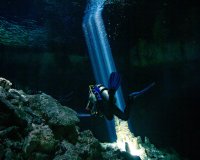
Features a vast cavern with light beams filtering through, illuminating the underwater landscape. Visibility: Generally excellent, with clear waters enhancing the diving experience.Conditions: Water temperature remains around 25°C (77°F) year-round.
Cenote Kukulkan is the perfect cenote for the first time. A very beautiful and large light-filled area. Here you will see a beautiful light laser show in perfect weather.
Located at the southern tip of Mexico’s Caribbean coast, Xcalak is one of the last truly untouched diving destinations in the region. Part of the Xcalak Reefs National Park and the Mesoamerican Barrier Reef System, this remote area offers pristine coral formations, healthy marine life, and a peaceful environment!
This dive site is near Tulum, Mexico and is a great site for beginners. The water is shallow, warm, and easy to access. It can be done as a shore dive. There are your typical Caribbean reef corals and sponges mixed with a sandy bottom.
This is a wreck of a ferry-style sunken ship Mama Viña. The wreck itself is not very big and at a depth of 28m; giving us the perfect bottom time for a complete tour.
The cenote Tajma Ha is very popular because of its beautiful halocline and its great light. During the dive you experience three very different cenotes, because you dive from Tajma Ha to Cenote Sugarbowl and from there to Cenote Esmeralda. All three give very different impressions.
One of the most popular dive sites on the island of Cozumel, Palancar Gardens starts over a shallow reef at 33 feet and then drops off as a mini wall to over 130 feet. There are many fun caverns and swim-throughs to explore. The reef is very healthy, the vis is spectacular, and marine life is abundant.
Cenote Dream Gate is world renowned as part of the original Sac Actun system, the largest underground river systems in the world. It also gives you the chance to explore 2 cavern circuits of about 40 minutes each, while observing huge calcareous columns, stalactites and stalagmites.
What you might see: Spectacular play of light rays falling into the water. Fossilized coral formations. Halocline layers where visibility warps like a dream sequence.
The C-53 was purposefully sunken with the aim of it becoming an artificial reef dive site. The wreck was thoroughly prepared for safe diving, including easy penetration and egress. The wreck is 55m/184ft long and the deepest point lies 23m/76ft deep.
This is a freshwater cenote perfect for practicing open water skills for courses that require shallow water. It has a maximum depth of 9m. There is also a cave in this cenote, but this section is only for certified cave divers.
The cenote Taak Bi Ha is still a little insider tip for divers who already have a little experience in the cenotes. The cenote has many formations and even without cave diving training you get a little idea how it could be.
Right at the entrance of the Puerto de Abrigo marina, a wall drop off starts at 45 ft/15m of depth. The wall extends over one kilometer North to Cantarel, past the Coral Princess hotel. Frequent strong currents take divers flying over the reef, sometimes finishing the dive in another site.
Chan Hol, part of the Toh ha cave system, is a cenote and submerged cave system in Quintana Roo, Mexico, of interest to paleoanthropologists. The remains of three prehistoric human fossils were discovered within the cave system.
Yax chen means green pond in Mayan. Open cenote of the Ox Bel Ha system. On average 5-7 meters deep, the bottom composed of tiny shells, sediment and algae is very sensitive. Large boulders allow for areas where you can stand. With rain the tannic acid creates a colorful thermocline on the surface.
Little Brother: A shallow entry point leading to a cavern adorned with stalactites and an air dome. Generally excellent, with clear waters enhancing the diving experience.
In the Ejido Jacinto Pat, on the same road as Cenote Dos Ojos, Cenote the Pit, Nicte ha, and a few others. 10 minutes north of Tulum. Average depth is 4-5 meters, must have very good buoyancy to enjoy this dive.
A deep dive of an average of 26m, with three different plateaus of reefs that are separated by intervals of sand banks in the form of dunes. Strong current.
As the shelf of Dzul Ha drops off, a gently sloping wall with sandy patches and scattered coral balls offers great night dives and plenty of marine life. This dive starts at the Money bar and can end 700 meters further North at the Presidente Intercontinental hotel.
15 minutes from north of the island. Located right at the southern tip. Great drift dive. The only drift dive of the island where you can see big turtles in May through July.
Maracaibo Reef is the Southernmost dive site on Cozumel’s Eastern shore. It is a deep drop-off with a large arch, one of Cozumel’s famous underwater landmarks.
5 min from the coast by boat just parallel to Playa del Carmen down town we will find El Cantil the amazing deep wall is great for deep diving training.
Sites in Punta Sur are for advanced level divers due formidable prevailing currents and the typical depths of these sites. Devil’s Throat is a famous passage located on the southernmost end, with an entry point at around 90 feet deep and winds down to 140 feet through a lengthy, narrow downward cavern.
Santa Rosa Shallows is the counterpart of the famous Santa Rosa Wall. The shallows are a great second dive after exploring the deeper wall. The reef here isn’t any deeper than 60 feet with a mild current; excellent for viewing the buzzing reef activity all along the patchy reef system.
Shallow easy reef dive site. Maximum depth 13m. Mixture of sandy areas and reef. Ideal for Basic Diver and Open Water courses, also excellent training dive site with a large sandy area by the boat moooring line.
Cenote with dripstones, Well accessible via stairs. Good entry - beware of silt out. Maximum 4 - 6m deep and partly very shallow. Must have good buoyancy.
Punta Tormentos is a fringing reef which starts immediately after the end of Yucab. The ref is located 600 meters from a sandy cove at the shore in the south end of the w-shaped Punta Tormentos point. The dive is 650 meters (0.4 mi) long, and navigating 40 course after its end leads directly to the No-name reef.
Almost exactly in front of the Occidental Cozumel hotel, this wall offers divers breath-taking views of the abyss under the steep pdrop off as well as many pass-throughs between the deep blue and the safety of a relatively shallow shelf. A few adjacent shallower coral balls offer a suitable spot for a safety stop.
Barracuda has a ripping current most of the time, and sometimes there is down and out current. Lots of sponge and big groups of fish. In the right season, this is a good spot for eagle rays. Advanced certification is recommended to dive here.
Cantarel is a beautiful wall with nice drop-offs. In the right season, it is common to find groups of eagle rays. It is better to treat it as a strong drift dive, jump all together, and come out together. It can have a strong current, sometimes pushing out or/and down the wall.
This reef is in front of Chakanaab Park. Mild currents make this a good dive for novices. The abundance of sea life make this an interesting dive for all levels, although it can be deeper in some areas (average 21m/ 70 feet) so good air consumption is important to maximize bottom time.
With a max depth of 25 feet, this is the perfect site for beginner training, new divers, update classes, or divers looking for an abundance of marine life and long bottom times. Endless photography opportunities for experts & novice UW photographers is also a plus!
Located just south of town, this is a great entry point for confined and open water training. Max depth 20 feet and partially protected from the current. Also great for night dives & photographers.
This site is born from the millenial growth of the coral reef, giving birth to taller walls and a wide and a narrow canyon where a shark sometimes comes to rest. Following the walls while hunting lionfish will lead you to two islands surrounded by big specimens of barrel sponges.
An very nice underwater trench that makes for a beautiful wall dive. Current can sometimes convert it into drift diving. The depth ranges from 5 m/15 ft to 26m/90ft. It is full of alcoves where fish hide and tower-like structures of coral at the end of the dive.
Blackwater Diving is the new “thing“ in Cozumel. Entry point is 3-4 miles off the coast of Cozumel Island over the MesoAmerican Barrier Reef System.
It is a group of coral islands on a flat sandy bottom. It is very appropriate for both very beginners and for Open Water divers as depth ranges from 9 meters/30 feet to 15 meters/50 feet. Visibility is usually more than 20 meters/65 feet and the abundance of fish on the coral islands is an admirable beauty.
Great dive site for novice divers, photographers, and night dives. Max depth 9-12m/30-40ft; current varies from slow to moderate so even though it’s close to shore, shore diving is not recommended.
One of the best shore dives available in Cozumel! Perfect for training dives, refreshing your skills, night dives, or simply enjoying a relaxed dive at your own pace, also perfect for photographers.
Did you know that this ship served the US NAVY in the Atlantic during World War II? Welcome to the Juan Escutia C-56 wreck! Sunk in 2000 in the Puerto Morelos Reef National Park. This wreck lies at 27 meters / 90 feet on a white seabed.
Just 10 minutes away from the boat we find this incredible diving spot, as indicated by its name, Fish Market, given the number of schools of fish that we can find.
Ojo de Agua is a shore diving spot, here we can enjoy a cenote inside the sea that provides nutrients and hence the amount of fish that can be observed in this place both during the day and in its magnificent night dives.
J-3 It is a diving point located just 5 minutes away by boat, 9m deep, here we can appreciate a blanket of white sand with a large wall of corals.
As its name indicates, it is a crescent-shaped coral formation on a layer of white sand at a depth of about 15m. During the descent you can appreciate its shape in all its splendor.
Rodman, a dive just a few metres from the second largest coral reef in the world, at a shallow depth of 7m, with various types of coral formations, is a fantastic site but variable in both visibility and current.
Puentes is another great diving spot, the reef is about 20m deep where we can find coral formations in the form of natural bridges which you can swim through.