Embark on an underwater journey to discover the world’s most spectacular diving destinations, pristine dive sites, and fascinating marine wildlife. From tropical reefs to historic wrecks, find your next diving adventure.
Connect with certified dive centers and professional instructors worldwide. Whether you’re a beginner or experienced diver, find the perfect location to learn, explore, and enhance your diving skills.
Experience the ultimate diving adventure aboard world-class liveaboards. Explore remote dive sites, enjoy multiple dives per day, and wake up in paradise at some of the planet’s most incredible underwater destinations.
For liveaboard trips, we partner with LiveAboard.com to offer the widest selection of dive safaris worldwide.
Liveaboard diving holidays pack more diving in the same trip and allow divers to explore far-flung dive areas and see more marine life in the most beautiful dive destinations of the world.
Whether its wildlife tours, cultural visits and scenic hikes you are after or idyllic shores, swim stops and wonderful meals on board, an adventure cruise offers an amazing experience you won’t easily forget.
Diving in Africa you can explore the wonders of the Red Sea or discover hidden gems like St. Helena Island.
Some of the world’s most paradisiac diving destinations in Asia can be found in Indonesia, Maldives, Malaysia, the Philippines, and Thailand.
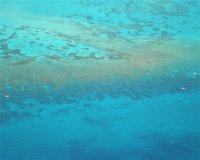
Das Great Barrier Reef, das größte Korallenriff der Welt, ist der Inbegriff des Tauchens in Australien.
Diving in Occitanie – Discover the best scuba diving in France!
North America offers a wide variety of adventures for every type of diver such as ice diving in Alaska or cenote diving in Mexico.
Some of the top diving destinations in Oceania include Micronesia, Fiji, Polynesia, Palau, Guam or the Marshall Islands.
In South America, you will find plenty of dive sites to choose from, including Ilhabela, Abrolhos Archipelago, and Easter Island.
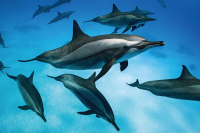
Kings of the Oceans
The Best Dads in the Sea
Gentle Movers of the Sea
Making the Oceans a Rainbow of Color
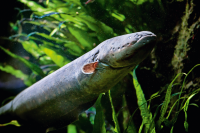
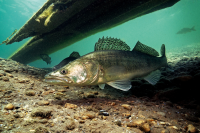
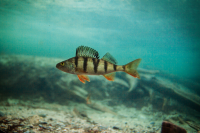
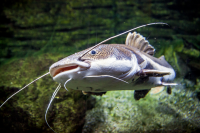
Dominators of the World’s Lakes and Rivers
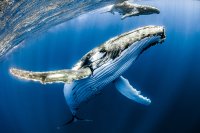
The Most Majestic and Ancient Ocean Swimmer
Diverse Ocean Dominators
Critters of the Sea
Mesmerizing Movers
Record Holder of the Seas
“Humans” of the Underwater World
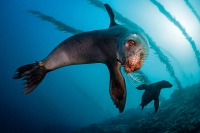
Curious, Playful, and Cute
Courses & Events
Divesites
Centers
The reef consists of various ledges and sandy channels, with the upper parts serving as manta cleaning stations. Located approximately 17km away, which is about a 30-minute boat ride, this dive site has depths ranging from 21-28m, offering a bottom time of 31 minutes for air divers and 40 minutes for nitrox divers
The inside edge of Aliwal Shoal rises from the sand forming a fantastic landscape of pinnacles, gullies, swim-throughs, and caverns. Some of the best diving in Africa is found on the Aliwal Shoal. It is home to a diverse array of marine life.
House reef Port Ghalib - offers something for every diver. The beginner can enter the water via a sandy beach and finds a nice reef at 5 - 20m depth. At the outer reef it drops down, depending on the training, to far over 60m.
Snorkelers and divers can enter the park via the jetty/zodiac, speedboat, or beach. The entrance is very easy because you enter the water from a staircase. This site is a slowly sloping reef with many plateaus and up to 40m depth. There is a beautiful canyon at 6 - 18m. Training platforms at 2,3,5 and 9m.
Kori is a rock that is seen out of the water, in the middle of the bay. From there starts a reef that goes max about 11 meters. Is a nice easy dive for all, recommended for the very beginners.All levels. Max Depth 11 meters. Duration 45-55 min. Access boat or long swim.
This is one of the most famous wrecks in the world. This site is suitable only for advanced divers and EAN is highly recommended. on a trip there you do at least 2 dives, inside and outside around. The bridge rises up to 17 m.
The HMAS Brisbane was scuttled in July 2005 to create an artificial reef off Mooloolaba’s Sunshine Coast. The Queensland government created a Conservation Park around the wreck. This wreck is buzzing with beautiful marine life.
Hol Chan is THE most popular dive area in Belize if not all of the Caribbean. This Marine Park sits just offshore from Ambergris Caye and boasts great visibility, beautiful coral formations, and TONS of marine life.
Fish Head Thila was formerly known for its enormous population of grey reef sharks. Now it depends on luck, season and the current to see them. The reef plate starts at about 10 meters depth and there can be currents. Fast descent required.
The dive starts at around 13 meters (45 feet) and can reach depths up to 27 meters (90 feet). Divers can explore both the reef and the wall, with the latter featuring steep drops and rich coral gardens.
Cozumel is one of the most popular dive destinations in the world and caters to divers with many diver-specific hotels year-round. Sitting just off Mexico’s Yucatan Peninsula, Cozumel boasts crystal clear, warm waters every day of the year and is home to a wide array of marine life.
Just about 15 kilometers south of the airport sits this marine protected area where you can dive all year round because it is protected by the Trade Winds.
Underwater gardens of Neptune; a rich and shallow reef rising to 8m under tough waves just off cape “Çondur”. There is definitely an antique wreck site here, lots of amphorae are scattered around up from 20 metres and all along the coastal side of the reef.
It´s also known as the moray Cave. It can be a bit difficult depending the current and visibility. To get the dive spot you need to by boat. Possibility to do Full Cave.
Kas ist eine wunderschöne Küstenstadt der Türkei, die direkt am Mittelmeer liegt. Entlang dieser Küstenstadt gibt es viele fantastische Tauchplätze mit kristallklarem Wasser und blühendem Meeresleben.
The island of Maui offers excellent diving opportunities, mostly on the north and western side of the island where the water is calmer. Maui’s neighbors, Lanai and Molokai also offer pristine, excellent diving.
Curtin Artificial Reef is the oldest reef created FOR divers, By divers. At this dive site, there are over 25 purposely sunken boats & others which can be found between 15m and 25m making this a great drift dive site. This is also a popular fishing site so be vigilant for fishing lines.
Tormentos is a very popular second dive among Cozumel dive charters due to its shallow depth (averaging around 65 feet) and little to no current. The reef is very healthy and full of life; a photographer’s dream.
Many divers consider Half Moon Caye Wall to be the best dive site in all of Belize. With excellent visibility, consistent and diverse wildlife sightings, and beautiful coral this dive never disappoints. Many diver operators choose this dive as the second dive following the Blue Hole.
One of the most popular dives in Cozumel. You will find a steep dropoff, with potentially strong currents and frequent eagle ray sightings. The water is beautiful with 30m or better visibility. There are big barrel sponges all along the wall. This is a more advanced dive site.
Palancar Caves is usually done as a multi-level drift dive, starting out fairly deep, usually hitting the recreational limit, to explore the deeper reef which is full of underwater tunnels and caves to swim through. Then you’ll make your way up the reef to the more shallow area to end your dive.
Located in the middle of the coral triangle at Bunaken National Park, this dive site is a wall dive thriving with marine life like beautiful corals, sponges, and more! Perfect for freediving, scuba diving, and snorkeling as well.
This is a shallow shore dive, no more than 30 feet of depth with a sandy/rocky bottom, not a lot of coral but plenty of diver friendly marine life. Visibility ranges between 10 to 30 feet. The site is ideal for check -out dives, training, or a long pleasure dive if you don’t want to travel far from San Juan.
This is a very popular dive site in Palm Beach County and consists of the remains of an old pier in front of the famous Breakers Hotel. Ranging in depth from just a few feet to 18 feet this site is great for divers and snorkelers alike.
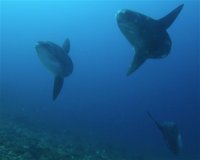
Located on the west-side of Nusa Penida Island, Crystal Bay has two coral reef formations separated by sand slopes. The combination of slopes and walls that form the topography at this dive site goes down to more than 50 meters and meets with large rock which is an ideal place for a cleaning station for sunfish.
One of the most popular dive sites in Cozumel, Paradise Reef is actually three separate patch reefs running parallel to shore and is accessible by both shore and boat. This is one of the few good shore-accessible dive sites on the island. Max depth is 45 feet so this is a good site for beginners and snorkelers.
Sandy areas and seagrass meadows surround this small reef, teeming with small fauna, especially when the water starts warming up. The top of the reef is at 16 meters. Highlights of this site are the friendly groupers that are accustomed to divers and the exceptional amphorae artifacts.
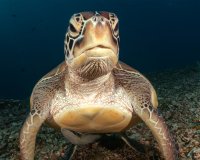
Protected Reef: Part of the Mesoamerican Barrier Reef System—the second-largest reef in the world!Turtle Town: Akumal literally means “Place of the Turtles” in Mayan, and yep, you’re almost guaranteed to see green sea turtles cruising by.Shallow & Clear: Great visibility (up to 30m/100ft)
Located just off the top of Olango Island the Baring site takes around 30 minutes to reach from Mactan. It offers a large sloping sand flat descending to a deep wall with superb corals.
A shallow, colorful reef 200 meters from the shore just South of Punta Tunich, this colar site is a short easy dive, usually visited as the second or third dive of the dive. Also a great snorkeling site.
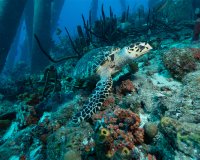
The pinnacle off of the north-eastern side of Gili Meno is home for many of the sea turtles around the Gili islands. This site is a slope that leads out to a pinnacle stretching from 9m to 30m with corals covering all the sides.
Also known as Tuffy Rocks, this site sits adjacent to the more popular ’Tackle Box’ dive site. This reef is fairly shallow and is good for newer divers and snorkeling alike. This site is boat accessible.
Tackle Box is a very popular dive site off of Ambergris Caye. It consists of canyons, caverns, tunnels and lots of places to explore for lobsters, eels and good macro life, or schools of jacks around the reef.
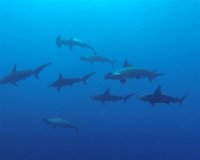
One of the best dive sites in the world. Can be done as a drift or mooring dive. Wonderful coral garden with soft and hard corals. Sometimes challenging currents on the “corners“. Backside of the reef known for hammerhead sharks in July to October.
The most famous site in Ras Mohammed. There are many ways to dive the site so there is something for everyone here. Shark Reef, Yolanda Reef, and Satellite Reef make up the 3 pinnacles. On Yolanda Reef you can find toilets and a mast laying around from the sunken Yolanda wreck.
A calm, easy shore dive where you enter the water from a small harbor. 20-30 meters out from the harbor you will find an interesting artificial reef made from dumped cars, cranes, and more scraps. Sometimes large tarpon hang around here.
Active pier for loading salt from the salt works on the island of Bonaire. It can only be dived when no ship is moored, and no maintenance is being performed.
One of the most famous dive sites around. Just some rocks and some trees above the surface, but put your face in the water and you will experience a pure tropical aquarium.
Paseo del Cedral is a favorite Cozumel site among photographers due to the landscape that is covered in tight little coves and crevices for schools of fish to hide. This is a shallow dive with a max depth of 60 feet and great for beginning divers.
Diving the island of Little Cayman should be on every serious diver’s bucket list! The reefs are pristine, the walls are breathtaking, and the marine life is abundant.
Mahahual Reef sits on the Mesoamerican Barrier Reef System, the second-largest reef system in the world and boasts crystal clear water, healthy coral, colorful sponges, and tons of reef life.
Dive Site: Quiet bay with lots of corals and a wall. Entry over the reef top. Max depth: 30 metersTravel time: Approximately 35 minutes by minibus north.
Culebra, Puerto Rico has more than 50 named dive sites, perfect for divers of all levels, Beginner to Advanced. Currents can be from mild to strong with depths ranging from 30 ft / 9m to 80 ft / 24m.
Pickles Reef is not as well known as the other, larger reefs nearby but, due to its relatively shallow depth, it is an ideal site for both divers and snorkelers.
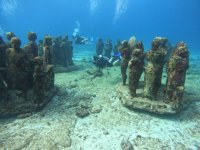
Probably one of the most unique dive sites in the Riviera Maya is the Cancun Underwater Museum of Art, otherwise known as MUSA. This site consists of 500 different sculptures all placed on the bottom of the ocean for divers to explore and appreciate.
This spur and groove reef formation sitting 5 miles off of Big Pine Key, in the Florida Keys, is part of the Florida Keys National Marine Sanctuary. Due to its protected status reef life is very healthy and active here.
Sand Key is a Sanctuary Preservation area that was originally its own island. Due to erosion and hurricanes, it’s been reduced to a very small patch of sand surrounded by a coral reef. The sand is an especially nice feature you don’t usually have at other Florida coral reefs. Great dive and snorkel spot.
Coffins Patch Sanctuary Preservation Area (SPA) is located approximately four miles off Key Colony Beach and offers some of the best snorkeling and diving in the Middle Keys. Maximum depth is about 25-30 feet/ 7 -9m.
Probably the most requested and recognized dive site in the Florida Keys, the Christ of the Abyss is a 10 ft tall bronze statue of Jesus Christ sitting in about 25 feet of water, making this an excellent, easy dive for all levels including snorkelers.