Explore dive destinations around the world. Whether you are planning a relaxed dive holiday or an adventurous dive trip, here you find the perfect location shaped by the ocean.
Discover marine wildlife and iconic dive sites worldwide. Whether you are drawn to coral reefs, wrecks, or big marine life, explore where divers dive and what lives beneath the surface.
Connect with certified dive centers and professional instructors worldwide. Whether you’re a beginner or experienced diver, find the perfect location to learn, explore, and enhance your diving skills.
Experience the ultimate diving adventure aboard world-class liveaboards. Explore remote dive sites, enjoy multiple dives per day, and wake up in paradise at some of the planet’s most incredible underwater destinations.
For liveaboard trips, we partner with LiveAboard.com to offer the widest selection of dive safaris worldwide.
Liveaboard diving holidays pack more diving in the same trip and allow divers to explore far-flung dive areas and see more marine life in the most beautiful dive destinations of the world.
Whether its wildlife tours, cultural visits and scenic hikes you are after or idyllic shores, swim stops and wonderful meals on board, an adventure cruise offers an amazing experience you won’t easily forget.
With over 400 islands scattered throughout the crystal-clear, warm waters of the Caribbean, Belize is a diver’s paradise. This small, tropical nation tucked under the Yucatan Peninsula offers countless adventures both above and under the water. Home to the second-longest barrier reef in the world, Belize diving never disappoints. Get ready to explore colorful, thriving reefs covered in a diverse arrangement of hard and soft corals, large sponges, and vibrant marine life. In between dives, Belize offers an extensive array of top-side adventures like jungle trekking, river rafting, zip-lining, or simply relaxing on one of its many white-sand beaches. No matter what calls you to Belize, it will never disappoint.
Diving in Africa you can explore the wonders of the Red Sea or discover hidden gems like St. Helena Island.
Some of the world’s most paradisiac diving destinations in Asia can be found in Indonesia, Maldives, Malaysia, the Philippines, and Thailand.
Das Great Barrier Reef, das größte Korallenriff der Welt, ist der Inbegriff des Tauchens in Australien.
Diving in Occitanie – Discover the best scuba diving in France!
North America offers a wide variety of adventures for every type of diver such as ice diving in Alaska or cenote diving in Mexico.
Some of the top diving destinations in Oceania include Micronesia, Fiji, Polynesia, Palau, Guam or the Marshall Islands.
In South America, you will find plenty of dive sites to choose from, including Ilhabela, Abrolhos Archipelago, and Easter Island.
Explore scuba diving in the Atlantic Ocean – from temperate reefs to pelagic encounters. Discover top dive sites, conditions and marine life.
Discover scuba diving in the Baltic Sea, famous for historic wrecks and cold-water conditions. Learn where to dive and what to expect.
Experience world-class scuba diving in the Caribbean with vibrant reefs, walls and warm water. Explore the best dive destinations and conditions.
Explore scuba diving in the Indian Ocean, home to tropical reefs, sharks and clear waters. Discover top dive destinations and seasons.
Discover scuba diving in the Mediterranean Sea, from historic wrecks to caves and clear coastal waters. Find the best dive sites and seasons.
Explore scuba diving in the Pacific Ocean, known for vast reefs and big marine life. Discover top dive regions and underwater experiences.
Experience scuba diving in the Red Sea, famous for vibrant coral reefs and crystal-clear water. Discover the best dive sites and conditions.
Discover dive sites around the world where activity is at its peak right now. Whether you are searching for exceptional wildlife encounters or the right dive season, here you find where the action is happening beneath the surface.
There is so much saltwater to discover, everybody forgets about lakes, rivers caves. Landlocked, freshwater dives offer also surprising and exciting underwater experiences, plus there is no need to rinse your equipment afterwards. From fresh springs, to alp lakes, wild rivers and mysterious quarries, freshwater diving is very diverse and is suitable for beginners as well es pro divers. Some world famous dive spots include the Silfra Fissure in Iceland, the cenotes in Mexico or Grüner See in Austria. Start your freshwater adventure!
Critters of the Sea
“Humans” of the Underwater World
Dominators of the World’s Lakes and Rivers
Mesmerizing Movers
Diverse Ocean Dominators
Curious, Playful, and Cute
Gentle Movers of the Sea
Making the Oceans a Rainbow of Color
The Best Dads in the Sea
Kings of the Oceans
The Most Majestic and Ancient Ocean Swimmer
Record Holder of the Seas
Courses & Events
Dive Sites & Wildlife
Dive Center
Located off George Town, Devils Grotto is a popular dive site among beginners as well as intermediate snorkelers. Devil’s Grotto features massive hulking coral heads with open chimneys and swim-throughs filled with tarpon, parrotfish, barracuda and schools of silversides.
The Santa Rosa Wall is one of the most famous wall dives in the world. This dive is for advanced divers as the wall drops away to hundreds of feet deep. it is easy to get pretty deep pretty fast so watch your gauges. This dive is also a drift dive but there are also lots of fun swim-throughs to explore as well.
Being a shallower reef, Yucab is a very popular second dive for many of the Cozumel dive charters. The reef is very colorful and healthy with lots of hard coral species and huge barrel sponges. There is usually a strong current here so this is always done as a drift dive.
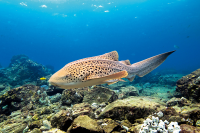
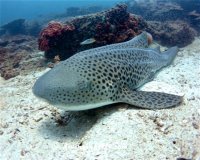
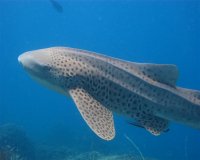
Shark Point is one the most famous and popular diving sites of Koh Phi Phi. It is maybe the best place to spot many Leopard Sharks resting and sleeping. The site consists of a large rock going down to 22 meters deep on a sandy bottom where the Sharks usually stay. Don’t worry, this kind of Shark is totally harmles
Paliton Sanctuary is a wall dive starting from a depth of 5 m, going all the way to 50m. This makes it an ideal dive site for every level. Beautiful and intact coral gardens are found with lots of little macro critters.
Ulua Beach is a well-groomed family beach, perfect for beginning snorkelers and divers. This beach as lots of parking, easy access and great amenities like freshwater, showers, and restrooms. An easy shore dive.
Tufia (Playa de Tufia) located just north of the Airport. A small beach/bay is accessed via a well maintained pedestrian road from the upper car park down to waters edge, this is quite a steep hill on the way back up, it will test your aerobic abilities for sure ;-) Depth ranges from 15-21m, recommend Open water +.
An advanced dive site about 500m to the seaward side of Two Mile Reef. Deep Sponge is named for its huge vase-like sponges. The reef is rather flat sloping down towards the seaward side. At 27m is falls down to 30m with a slight wall on the seaward side.
This dive site is only accessible by boat. The bikini dive site has an average depth of 18m and a maximum of 22m and is known as a photographer’s playground. This area of the reef always delivers a surprise of some sort such as nudibranchs, pipefish, paper fish, or some other beauty.
On the eastern side of the Malay peninsula, near the border between Thailand and Malaysia, this lighthouse reef point sits more than 100km off the coast, a truly isolated island in the middle of the ocean.
This “drift“ dive site is located on the north side of Nan Yuan Island, adjacent to Koh Tao. The name “Green Rock“ comes from the fact that the roots near the surface of the water look green. The depth ranges between 10 and 25 meters and 30 to 40 meters depth can be found with a short swim to the West.
Half way between Coral Garden and Dream Wall, Sandy Slope offers nice snorkeling on the top with soft and hard coral, sea fans, and loads of fish. If you swim towards the north, you will find a nice drop off to 40 meters deep.
The name derives from several abandoned local fisher boat anchors, which can be found there. Our anchor buoy is at 6m depth. It is an ideal dive site for Try Divers, beginners, check dives and snorkelling.
The Bora Bora classic! An exceptional dive on a magnificent shallow coral plateau with a beautiful drop-off. You can even dive in a cave and see lion fish
DivePoint MEP makes here the night dives and sometimes also Current Specialty Dives. The reef goes down from 3-4m to 30m. Some nice Blocks a bit higher are full of clownfish and in the night you will find often a lot of lobsters and shrimps. But its not always possible to dive here. The current can be extreme!!
Overgrown & atmospheric, this is one of our 30m / 100ft tug boat wrecks. Often surrounded by barracudas and snappers, this wreck provides great photo opportunities.
The reef top has something of a lunar landscape, despite or precisely because of this it is often a very special dive. The northern side often serves as a starting point when the current is draining from a steep wall over a sandy plateau to a normal slope. Manta rays between the end of September and November
If you want to see anemones you have to come to this place,, there is a field with hundreds of anemones where we also can always find turtles. The Giri has approx. a diameter of 120m and is easy to dive around. Some nice small overhangs
Bon Island, about 50 km west of Khao Lak, is an uplifted limestone island about 20 km north of the Similan Islands. This is a long and narrow ridge point on the west side of the island.
This hourglass freighter 50 m deep was built in Denmark in 1958. It sailed to Copenhagen and then to La Rochelle in the 70s. The Franjack lies flat on her keel on a sandy bottom at 24 m in good general condition except for the forward cabin which is collapsed.
The spot is facing the sandy beach of Jbeil and it’s an advanced site. The average depth is 38m and the sea bottom is ornated with several pyramid like structures.
Menjangan Island is a small, uninhabited island located on the western tip of the island of Bali. Because of the diversity of corals and species of fish here, the island has become part of the West Bali National Park so it has strict safeguard in place to protect its sustainability.
The dive site is located directly at the bay Galo Resort and the entrance via ladder is well suited for beginners. Entry can be challenging with waves. You can explore the small cave, search the wall for sea creatures, or undertake an anemone tour, there is much to discover here.
Totally shallow dive site if you stay on the island. Afterwards it is a steep sloping reef down to 30m depth. There can be a current. The shallow area is good for snorkeling, training courses, and night dives.
Fifteen minutes from Charlotte Amalie lies the beautiful Coki Point beach. This site has a sandy beach entry and is great for snorkelers and diving with coral reef extending to the East with max depth of 60ft/18m and to the West with a max depth of 50ft/15m.
One of the most popular wreck dives in the Florida Keys, this 500-foot wreck sites about 6 miles off of Key Largo beginning in 60 feet of water and dropping to over 100 feet. There are many see-through passageways to swim through so this wreck can be enjoyed by newer divers as well as experienced.
The dive site is very suitable for taster divers, training dives, and new divers. Caribbean-like water, sandy soil, closer to rocks rather stony ground, Posidonia
It is the only inhabited remote island in Shizuoka Prefecture, about 10 km off the coast of Atami, which can be reached in 30 minutes by ferry. After crossing the island, you can go beach diving or boat diving.
The descent at this dive site is made without a reference buoy. The entrance is at the edge of the cliff of the island platform located between six and eight meters, right at the junction between the Atlantic Ocean and the Mediterranean Sea. The cliff goes down to 22 meters and from there to 40-50 meters.
Slightly south of the entry point for Cedral Wall, this site is frequently overlooked by local dive operators despite the opportunity for shark & turtle sightings.
Koh Waeo is a small island about 3 km out from the north end of Bangtao Beach. The island is small with little top-side vegetation. Underwater, however, the island is about 100 times larger than what you see from the surface. Around the site are many buoys installed to moor the boats.
Crocodile Rock is a boat dive site located in Dwejra south from the Blue Hole. It combines a wall dive, going down to 30+ metres with a shallow, 7m deep plateau with a nice reef. This dive site is suitable even for less experienced divers.
Being the closest in distance to Kaş makes Fener a very popular dive site. It is a very diverse site. If you head east underwater you will find the “Ottoman wreck” to explore. It has a worn wooden spine and mails at 23 meters with a large water jug.
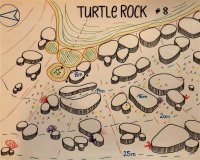
The dive site Turtle Rock is located on the west side of island no. 8, Koh Similan. The dive site owes its name to a granite rock that looks like a turtle.
This dive site is very close to the most famous Munassir Wreck. It is pretty shallow, from 6 m to 12 m. It is a really nice place for photography since the coral is in really good shape.
Amazing dive site of Bandar Khayran. In front of “First Entrance“ we have this wall that’s go down to 30 meters. Best solution start the dive inside the channel and follow the reef on the left shoulder. You can also stay more shallower and enjoy the amazing garden of soft and hard coral.
A very nice drift dive over several hundred meters along the island of Kottefaru. The top reef is made of hard corals that drop from 4 to 8m, sloping down to 15m, then a wall that drops far more than 30m. On the top reef between June and November the site becomes a cleaning station for mantas.
The reef has a gentle slope that descends to a sandy bottom at a depth of 18 meters. This depth makes it ideal for beginners making their first open water dives, as well as for divers conducting their check dives.
Site close to shark point, 20m-40m drop off, to be done only in rising tide. Site located at 50mn from the center, 21km, beautiful drop off, rich in fish.
Flynn Reef is one of Cairns’s outermost reefs. Expect excellent visibility. Flynn Reef provides some excellent wall dives, sloping coral gardens, and sandy lagoon holes where you can find coral bommies. Litte Tray’s is one of the many amazing dives on Flynn Reef.
Excellent dive site for beginners to experienced divers! Full with marine life like an aquarium. Great entrance from the shore, but you must swim 200 meters to reach the reef.
This site is an easy entrance on the right-hand side of the pier, directly under the car park. Sandy bottom with the coral reef starting at 5 m /15 ft and the drop off at 10 m / 30 ft. At 35 m /115 ft the reef turns into a sandy bottom again.
Richelieu Rock is one of the most popular dive sites in Surin Islands National Park. It is a limestone reef that rises almost vertically from a depth of 35 meters, and appears only at low tide, about 1 meter above the surface.
Koh Bon East Side offers a sloping reef with hard corals transitioning to a sandy bottom. It’s often where you find leopard sharks resting. While the main attraction is the West Ridge for manta rays, the East side provides a more relaxed dive with abundant reef fish and good visibility.
Large scattered bombies with a unique crevice, this site is suitable for most diving levels and reaches up to 15m depth. This site provides great diving year-round with plenty of critters both large and small.
La Plague Resort, house of coral reefs. great dive site for diving and snorkeling. Located at Jeddah Saudi Arabia Creek entrance. This allows for flow of many types of fish which enter and exit from the creek.The dive site is very well maintained and suitable for all divers levels.
Umm Chararim is located between St. John’s and Sernaka and offers impressive, light-flooded caves and a beautiful coral garden at a depth of 6-10 meters. A popular stopover, often visited by several liveaboards.
Claudio Reef is the most high light Reef in Fury Shoals, it contains of 2 small reefs and the south reef has 2 fantastic large caves. The caves are not completely covered, from above there are holes and light passes in. The caves are in shallow water.
Sahaung is one of the most famous dive sites in the area. You dive between two beautiful pinnacles and will find yourself surrounded by colorful corals and sea fans.
A 30m long sunken platform on the southwest side of Meno, this site is covered in hard and soft corals. The reef is a haven for many types of fish such as scorpion fish, stone fish, and juvenile batfish. Large schools of drummer fish are often seen here.