Explore dive destinations around the world. Whether you are planning a relaxed dive holiday or an adventurous dive trip, here you find the perfect location shaped by the ocean.
Discover marine wildlife and iconic dive sites worldwide. Whether you are drawn to coral reefs, wrecks, or big marine life, explore where divers dive and what lives beneath the surface.
Connect with certified dive centers and professional instructors worldwide. Whether you’re a beginner or experienced diver, find the perfect location to learn, explore, and enhance your diving skills.
Experience the ultimate diving adventure aboard world-class liveaboards. Explore remote dive sites, enjoy multiple dives per day, and wake up in paradise at some of the planet’s most incredible underwater destinations.
For liveaboard trips, we partner with LiveAboard.com to offer the widest selection of dive safaris worldwide.
Liveaboard diving holidays pack more diving in the same trip and allow divers to explore far-flung dive areas and see more marine life in the most beautiful dive destinations of the world.
Whether its wildlife tours, cultural visits and scenic hikes you are after or idyllic shores, swim stops and wonderful meals on board, an adventure cruise offers an amazing experience you won’t easily forget.
From the Andaman Sea to the Gulf of Thailand, both beginner and advanced divers can find magnificent diving throughout this beautiful country’s coastal regions. Thailand is famous for its stunning white-sand beaches set against lush tropical forests and limestone cliffs jutting straight up out of the ocean. Thailand’s warm waters are thriving with marine life with over 200 species of fish, rays, turtles, and sharks and 80 species of colorful corals. Diving in Thailand is every diver’s dream. With its magical underwater world set against a stunning landscape and friendly locals offering delicious cuisine, it is no wonder Thailand is one of the most perfect dive destinations.
Diving in Africa you can explore the wonders of the Red Sea or discover hidden gems like St. Helena Island.
Some of the world’s most paradisiac diving destinations in Asia can be found in Indonesia, Maldives, Malaysia, the Philippines, and Thailand.
Das Great Barrier Reef, das größte Korallenriff der Welt, ist der Inbegriff des Tauchens in Australien.
Diving in Occitanie – Discover the best scuba diving in France!
North America offers a wide variety of adventures for every type of diver such as ice diving in Alaska or cenote diving in Mexico.
Some of the top diving destinations in Oceania include Micronesia, Fiji, Polynesia, Palau, Guam or the Marshall Islands.
In South America, you will find plenty of dive sites to choose from, including Ilhabela, Abrolhos Archipelago, and Easter Island.
Explore scuba diving in the Atlantic Ocean – from temperate reefs to pelagic encounters. Discover top dive sites, conditions and marine life.
Discover scuba diving in the Baltic Sea, famous for historic wrecks and cold-water conditions. Learn where to dive and what to expect.
Experience world-class scuba diving in the Caribbean with vibrant reefs, walls and warm water. Explore the best dive destinations and conditions.
Explore scuba diving in the Indian Ocean, home to tropical reefs, sharks and clear waters. Discover top dive destinations and seasons.
Discover scuba diving in the Mediterranean Sea, from historic wrecks to caves and clear coastal waters. Find the best dive sites and seasons.
Explore scuba diving in the Pacific Ocean, known for vast reefs and big marine life. Discover top dive regions and underwater experiences.
Experience scuba diving in the Red Sea, famous for vibrant coral reefs and crystal-clear water. Discover the best dive sites and conditions.
Discover dive sites around the world where activity is at its peak right now. Whether you are searching for exceptional wildlife encounters or the right dive season, here you find where the action is happening beneath the surface.
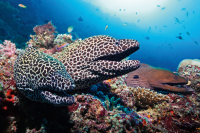
From the Caribbean Sea to the South Pacific Ocean, divers can find fantastic muck and macro diving worldwide. Muck diving gets its name from the “mucky“ environment, usually muddy sediment, where small yet fascinating animals are found. Macro photographers or those that just love hunting for small, beautiful species love the adventure muck diving brings. Explore the best muck dive sites in the world where you can find tiny octopi, colorful nudibranchs, brilliant shrimp, gobies, and much more! Go muck diving today!
Critters of the Sea
“Humans” of the Underwater World
Dominators of the World’s Lakes and Rivers
Mesmerizing Movers
Diverse Ocean Dominators
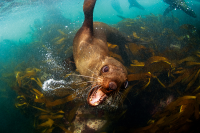
Curious, Playful, and Cute
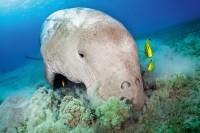
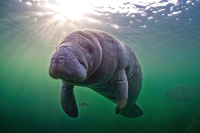
Gentle Movers of the Sea
Making the Oceans a Rainbow of Color
The Best Dads in the Sea
Kings of the Oceans
The Most Majestic and Ancient Ocean Swimmer
Record Holder of the Seas
Courses & Events
Dive Sites & Wildlife
Dive Center
Koloa Landing is located in Hanaka’ape Bay, Kauai and is a very popular dive site, especially for scuba instruction. The entry is easy, and there is plenty to see to the left and right of the landing.
These caverns are located on the western side of the atoll past the Kuramathi Resort sandbank. There are many large overhangs here, but also two caverns through which divers can swim (one at 18-20 meters, the other at 28-30 meters).
Small walls from 5 metres to 18 metres where you can find hard and soft coral. This site is unique for the small wall and offers great visibility and nice temperatures.
Located in the middle of the coral triangle at Bunaken National Park, this dive site is wall dive with abundant marine life, beautiful corals, sponges, and more. This site is perfect for freediving, scuba diving, and snorkeling.
This dive site is in the middle of the ocean and is a drift dive. You will find some pinnacle with sponges and hard coral. It is a tidal dive so make sure you make this dive when it is low tide.
Located between the dive sites Buyuk and Sental, PMG is marked with a small temple in the shallows and is a common place to see mola mola cleaning (at the right time of year). Usually a gentle drift, this site is a gentle slope with plenty of soft corals and an abundance of fish life.
Hans Reef is a gentle sandy slope that runs parallel to the shore and features a large coral mound and smaller outcrops. It is suitable for divers of all experience levels and is often used for training. It is excellent for night diving and navigation. Coral blocks attract a lot of marine life!
An excellent site for viewing larger marine life on the north side of Gili Trawangan. A flat sandy bottom turns into a series of progressively deeper canyons that run parallel to the shore. The Glen Nusa shipwreck is located at the northern part of the site in 28m of water.
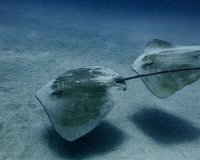
The diving point is located 2 minutes by boat from Port d’Aro. Ideal for both underwater photography enthusiasts and beginners. Stingrays and eagle rays.
Coral Garden is situated 5-10 minutes away by boat from Praslin. A reef type of dive surrounded by soft and hard corals. Depth is around 10-15 meters.
Usually entry from boot in shallow area. Teardrop-shaped lush coral reef with large fan corals and barrel sponges in the deeper areas. Sometimes difficult to dive due to currents.
Entry from a sandy beach shore line, you will swim toward a slope where you will start your dive. Start off by swimming to the right, then follow the ledge to come across a few coral blocks with lots of colorful fish. Continue along the right side to find turtles eating on the ocean floor.
This dive site is easy access by speed boat and best to dive with the current. Divers and a dive leader should be well coordinating with a speed boat captain about the dive time, pick up point, and exit for the dive. The reef is absolutely beautiful, an extended pristine coral reef.
Ped is a beautiful dive site on the north side of Nusa Penida. Ped features a sloping reef starting at 5m, descending all the way to 40m and beyond. Currents range from mild to strong.
A wonderful drop off that starts at 12 meters forms this site. There is a huge mixture of different species of hard and soft corals, with big colorful sponges that are living on it.
Small Wall is a huge coral reef that starts at the surface and reaches to 50 meters of depth. It is a great spot for all levels of divers, from OWD to the XR addict! Around 30 meters there is a second drop off where colorful corals and gorgonians create a very captivating environment.
6 - 30 meters - On this site, you descend along the reef to the sand on which are scattered several coral heads sheltering a multitude of different species.
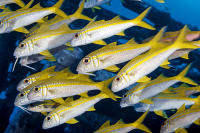
This dive site is nice for beginner divers, it is also only accessible by boat. This site is at the southern end of Bikini and is named Mellow Yellow due to the large number of large shoals of yellow fish found in the area.
Coral Gardens is home to coral bommies teeming with life, which act as mini cleaning stations with shrimps, crabs, and cleaner wrasses. The coral bommies develop into beautiful coral gardens filled with healthy hard coral species.
A huge hard coral formation surrounded by stunning soft coral. You will find a pinnacle of coral and different types of fishes. The visibility is good.
Located in the middle of the coral triangle at Bunaken National Park, this is a wall dive with abundant marine life, beautiful corals, and sponges. A perfect site for freediving, scuba diving, and snorkeling.
Mwana Wa Mwana is a favorite local dive site. Depth ranges from 2m to 15m. The name of this site means baby of the baby in Swahili. Mwana wa Mwana is a small island north of Tumbatu; in low tide, the two islands are connected by a sandbank.
This dive develops around 3 pinnacles (Batu Tiga means 3 rocks / pinnacles). Starting from the first pinnacle at 5 meters, you slowly descend until you meet the second, about 20 meters deep and the third with the base at about 30 meters.
Emerald called also Embral is at the end of a large volcanic wall starting with the Drop-off in Tulamben village. Accessible only by Jukung traditional boat.
This dive site is formed by a coral drop off that starts at 15 meters deep. For this reason divers should be at least advanced certified to dive here. Follow the reef to find two big formations of Turbinaria full of amazingly active fish life.
Located in Koganezaki Park, you can enjoy various flowers depending on the season, and entry/exit is very easy to do due to the ramps and handrails. When you enter, you’ll see a wide range of gorotas up to a few meters deep, and beyond that, you’ll see an entire surface of the sand.
Shane’s is one of the most special reefs to locals in this area. It always surprises with weird, rare marine life. This is a must dive for photographers and macro lovers! Depth ranges between 6 to 25 meters.
Fingers Reef derives its name from its finger-like protrusions that shape the primary reef. It is a 2km boat ride lasting approximately 7 minutes, with a maximum depth of about 16m.
This place is located about 10 minutes by boat from the next hotel ... on a reef. The name comes from the fact that it is right next to the canyon reef. As you have many possibilities to dive there, several dive sites have been created on the same spot.
Accessible from shore, Jemeluk Bay presents the wall as a deeper dive site and the bay itself. Suitable for beginners the same as for experienced divers, Jemeluk is still quite rich in hard corals and soft corals close to the corner with Bunutan.
This site is formed by a coral reef that, from the surface, decreases very gently into the water. The environment is formed by many species of hard corals of different shapes and colors.
Misoli Reef averages from 12 to 40 meters deep. It has a large coral island located in a big area of white sand, typical to Zanzibar. Fish life is less abundant here compared to other sites, but many nudibranchs and other small critters can be found, making it a treasure for photographers and macro life lovers.
Nice reef along a sand bank hiding small and big in the corals as well as in the sand between 11 and 20 mts, ideal for training and open water levels
A flat reef in the middle of a snake-shaped sandbank, nothing special at first glance... Don't be mistaken, this is the richest place in marine fauna of the region.
This site is composed of two pieces of reef separated by a sand bank. With a depth of 17 mts, the profile of this site is relatively easy. So it is good for beginners and marco photographers.
Wreck of a former tugboat that worked in the port of Port Louis, sunk in the 1980s for scuba diving, at only 19 mts. Lost of life as on all artificial reefs.
Gato Island is a well preserved marine reserve and sea snake sanctuary. This is one of the five famous dive sites on the Island. The site is a tunnel where you take a tour underneath the island. This site is best for more experienced divers/
Drop off located at the corner and at the outside reef with a lot of small and very big overhangs form 5 meters to 20 meters. Whip corals inside the channel and many anemones.
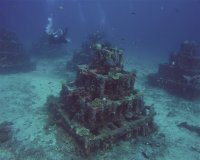
Artificial coral reef placed on the sandy bottom with depths varying from 10 meters to 25 meters. The basis of the coral growth is made of rectangular concrete arranged like a small pyramid. It is one of the best places to witness a successful artificial reef.
Perfect dive site for beginners, diving and snorkeling. The dive site in front of the center has an easy entrance accessible to all starting from 2m to 12-14m with a small wreck on the right side of the tip.
This is a white sandy bay with clear water that has healthy corals at its edge, followed by a rubble area. Some bommies come to adorn the bay. Away from the beach, the sandy bottom begins to decline towards to more than 20 meters deep where you can find several cleaning stations.
This wreck site requires a short swim from the nearby reef “Giri“ to reach it. This well-preserved wreck sunk in 1994 and is teaming with marine life.
Angel’s Canyon impresses with its extraordinary underwater landscape. You dive around huge, beautifully overgrown rock formations, which have also created a small canyon in the shallow part, after which the site was named. Hard and soft corals alternate and are inhabited by a variety of colourful reef fish.
Macro dive site - sponges and coral growth only in shallow water, from 7-10 meters it turns into a sandy slope, It is worth examining every little irregularity in the sandy bottom and above all the growth - especially the small sponges, hydrozoans and corals.
Out of Eden is only a short boat ride from resorts close by. The entrance is in the shallow area and you follow the densely overgrown coral garden along a headland to an area of 25 metres. The coral field ends there and you are surrounded by various schools of fish. Large barrel sponges can be seen as well.
Batu Ringit is a great macro dive site, paradise for photographers by day and by night. If you’re into macro diving and photography, Batu Ringit should definitely be on your list!
The southern boats pass is certainly one of Mayotte’s most impressive. Very subject to date, you will have good chance of crossing “big stuff” on this site. 25 meters, you will find a cave in which you can stay to watch the paradise in front of you ... Impressive!
0 - 35m - Facing Saint-Leu in the west of La Reunion, to the south of the Kiosques site, you will discover an alternation between coral and sand (ravines).
A peaceful and scenic dive site known for its calm conditions and divers habitat. The site features a gently sloping sandy bottom interspersed with coral patches, seagrass areas, and small reef formations. Depths are generally shallow to moderate, making it suitable for beginners, training and relaxed dives.
Clownfish is the shallowest divesite we have in Tofo, inside the bay it is a perfect spot to try scuba diving for the first time with depths between 6 and 12 meters. Allowing us to practice all the skills required for entry level courses.